Crypto Wallets Explained: Which Wallet Should You Choose?
Use multiple wallets wisely: cold for savings, hot for spending

Key takeaways
- Security First: Always protect your private keys.
- Choose Wisely: Match your wallet to your needs.
- Cold for Savings: Use cold wallets for long-term storage.
- Hot for Convenience: Use hot wallets for daily transactions.
- Stay Protected: Never share your recovery phrase.
Introduction: Why choosing the right crypto wallet matters
Cryptocurrency has changed the way people think about money, investments, and financial independence. Whether you are buying Bitcoin, exploring Ethereum, trading Solana, or experimenting with decentralized finance (DeFi), one important decision you will eventually face is choosing the right crypto wallet. A crypto wallet is more than just an application for storing digital currencies; it is your gateway to the blockchain, allowing you to send, receive, manage, and interact with digital assets. However, not all wallets offer the same level of security, convenience, or control. Some are designed for beginners who want a simple experience, while others provide advanced security features for people holding substantial amounts of cryptocurrency. Choosing the wrong wallet can expose your assets to unnecessary risks, so understanding the available options is an essential first step.[1]
 Watch on our channelWhy choosing the right crypto wallet matters
What exactly is a crypto wallet?
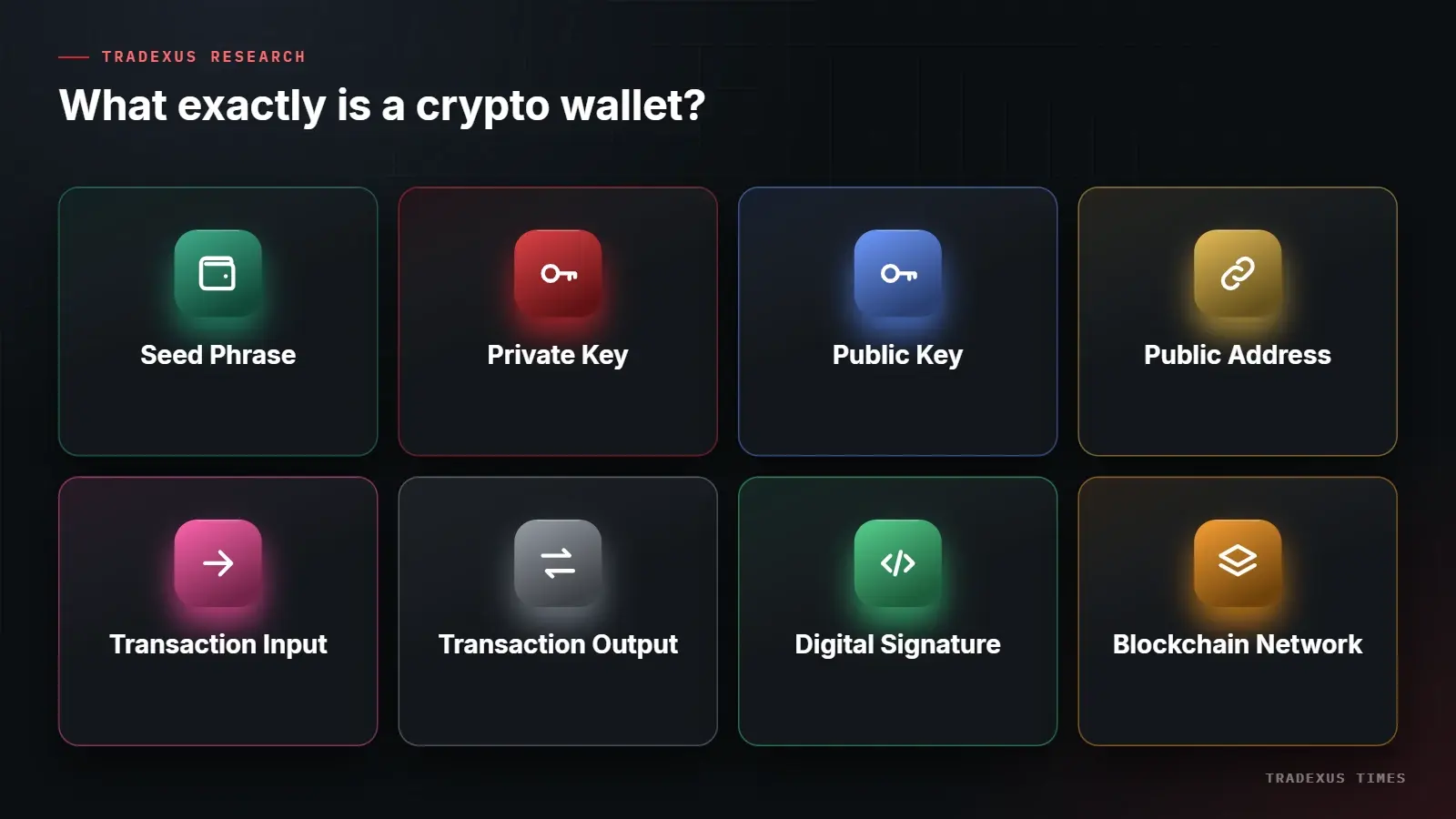
A cryptocurrency wallet is a digital tool that allows you to access and manage cryptocurrency recorded on a blockchain. One important detail that beginners often misunderstand is that crypto wallets do not actually store coins inside your phone, computer, or physical hardware device. Your cryptocurrency remains recorded on its respective blockchain. Instead, the wallet manages the cryptographic keys that prove you have authority to access and transfer those assets. Every wallet has a public address, which works somewhat like a bank account number and can be shared with other people when you want to receive cryptocurrency. It also uses a private key, which acts like a highly sensitive digital authorization credential. Anyone who gains control of your private key may be able to move your funds. This is why protecting your wallet credentials is more important than simply protecting the device on which your wallet is installed.
Understanding the different types of crypto wallets
Before choosing a wallet, you should understand the two main ways wallets are classified: by their internet connectivity and by who controls their private keys. In terms of connectivity, wallets are generally divided into hot wallets and cold wallets. Hot wallets are connected to the internet, making them convenient for everyday transactions, trading, and interacting with blockchain applications. Cold wallets, on the other hand, keep private keys offline, reducing exposure to many online attacks. In terms of ownership, wallets are classified as custodial or non-custodial. With custodial wallets, a third-party company manages your private keys on your behalf. With non-custodial wallets, you control your own keys and are responsible for protecting them. Understanding these differences will help you identify which wallet matches your experience, security expectations, and investment habits.
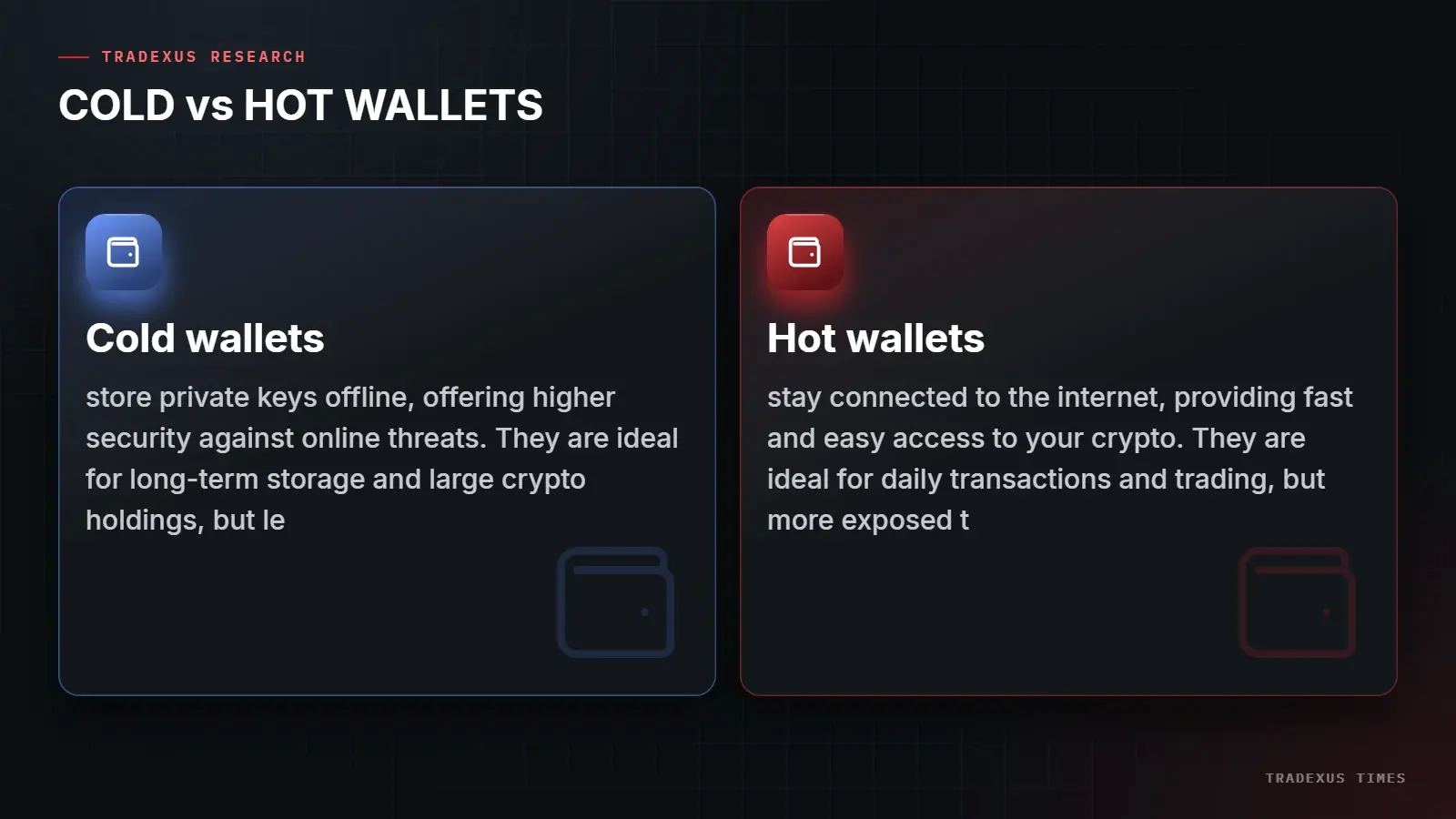
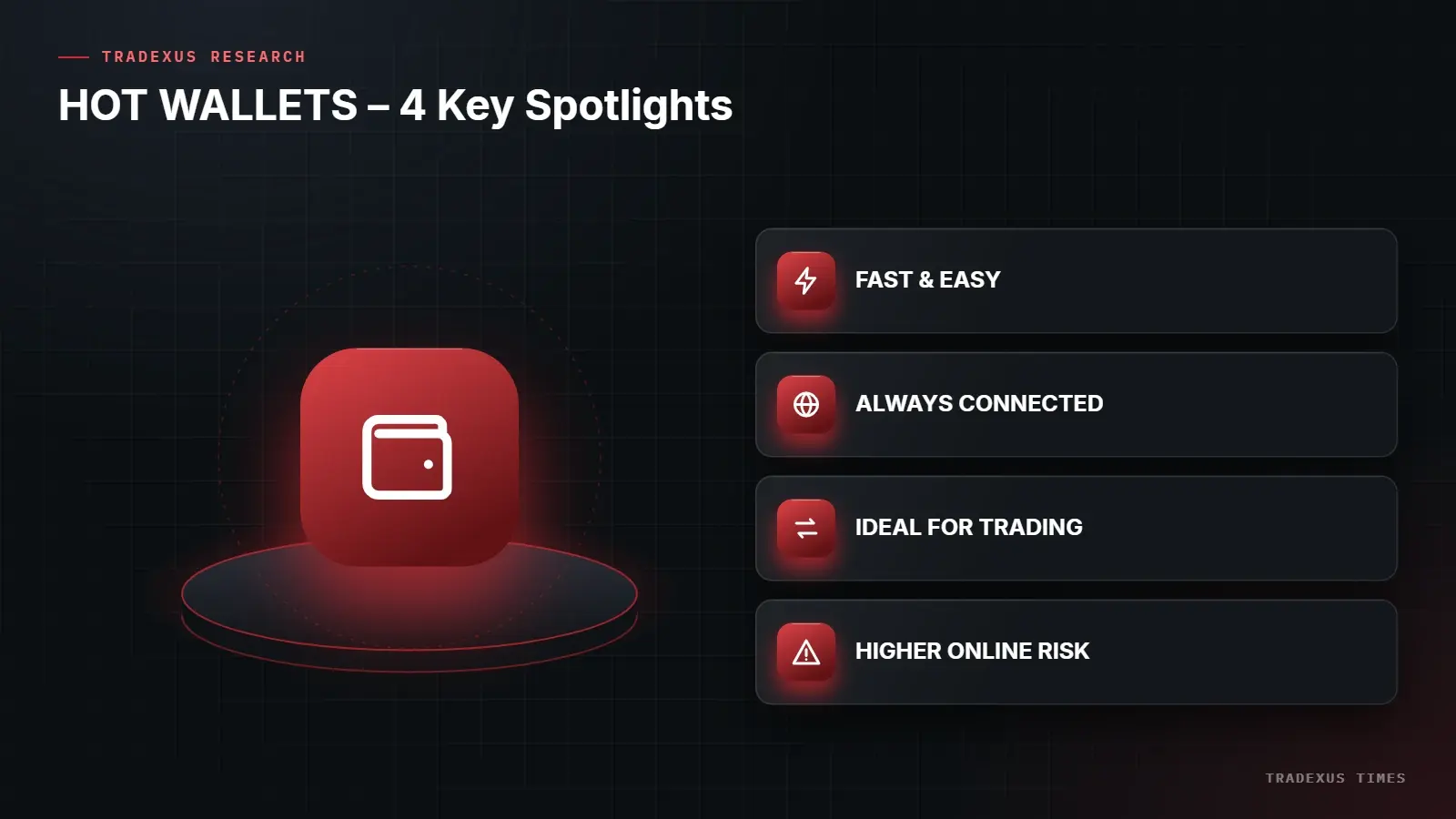
Hot wallets: Convenience for everyday crypto users
Hot wallets are among the most popular choices for people entering the cryptocurrency market. They are typically available as mobile applications, browser extensions, or desktop programs, allowing users to access their assets whenever they have an internet connection. Popular examples include MetaMask, Trust Wallet, and Exodus. These wallets can make sending and receiving cryptocurrencies relatively straightforward, while some also support decentralized exchanges, NFTs, staking, and other blockchain applications. Their biggest advantage is convenience: you can manage your assets without carrying a physical device. However, because hot wallets operate in internet-connected environments, they may be exposed to phishing websites, malicious applications, malware, and compromised devices. A hot wallet can be an excellent option for everyday transactions, but keeping all your long-term cryptocurrency holdings in one internet-connected wallet may create unnecessary security risks
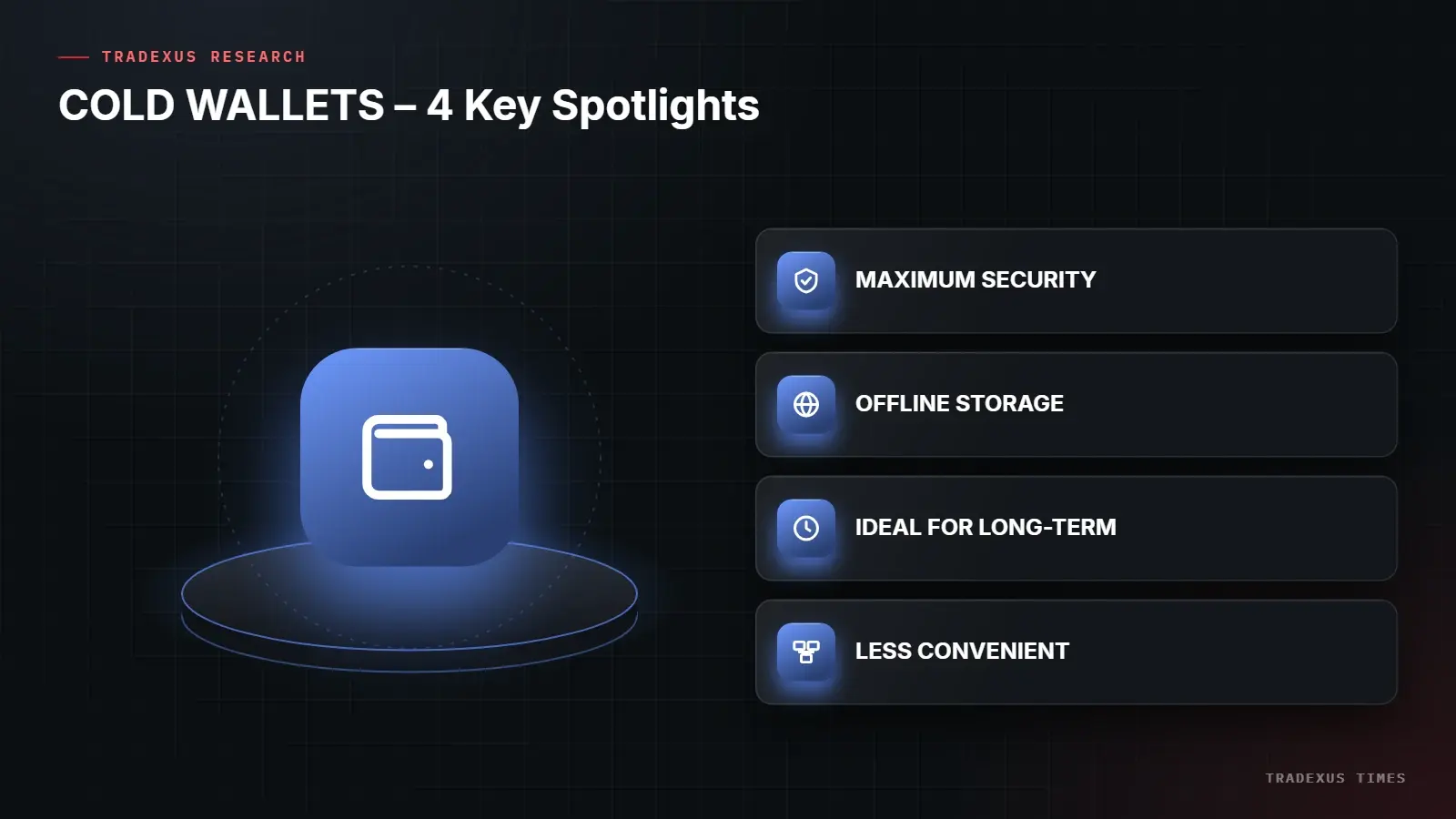
Cold wallets: Better protection for long-term holdings
Cold wallets are designed for people who prioritize security over instant accessibility. A common example is a hardware wallet, which stores private keys within a dedicated physical device and allows transactions to be authorized without exposing those keys directly to an internet-connected computer or phone. Well-known hardware wallet brands include Ledger and Trezor. These devices are particularly useful for investors who plan to hold cryptocurrency for months or years rather than frequently trade it. Even if your computer becomes infected with certain types of malware, a properly designed hardware wallet can provide an additional security barrier because transaction authorization happens on the device itself. Nevertheless, cold storage is not completely risk-free. You must protect your recovery phrase, purchase genuine devices from trustworthy sources, and carefully verify transaction details before approving them. Losing the hardware device does not necessarily mean losing your funds, provided you still have a valid recovery backup.
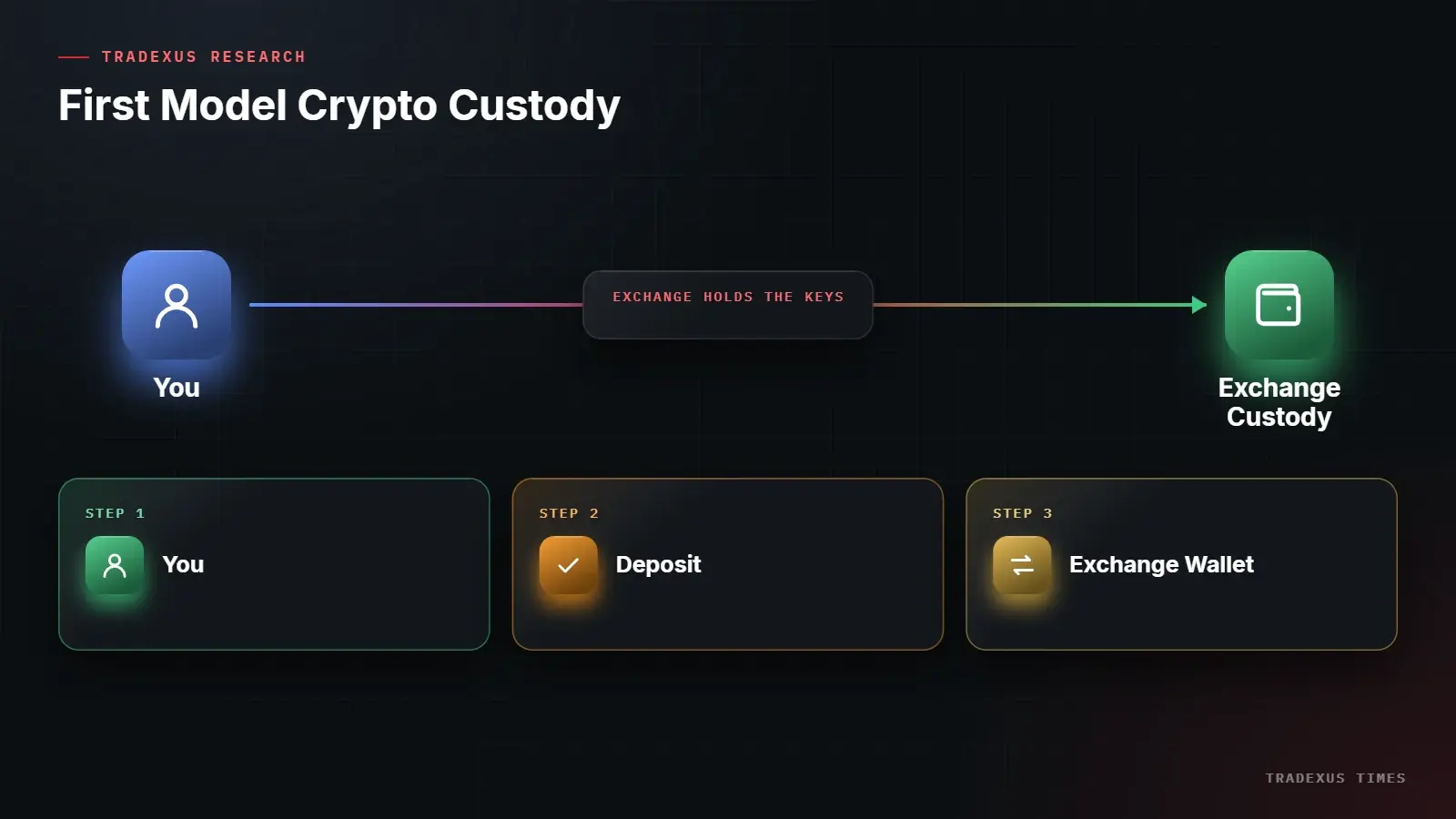
Custodial vs. non-custodial wallets: Who controls your money?
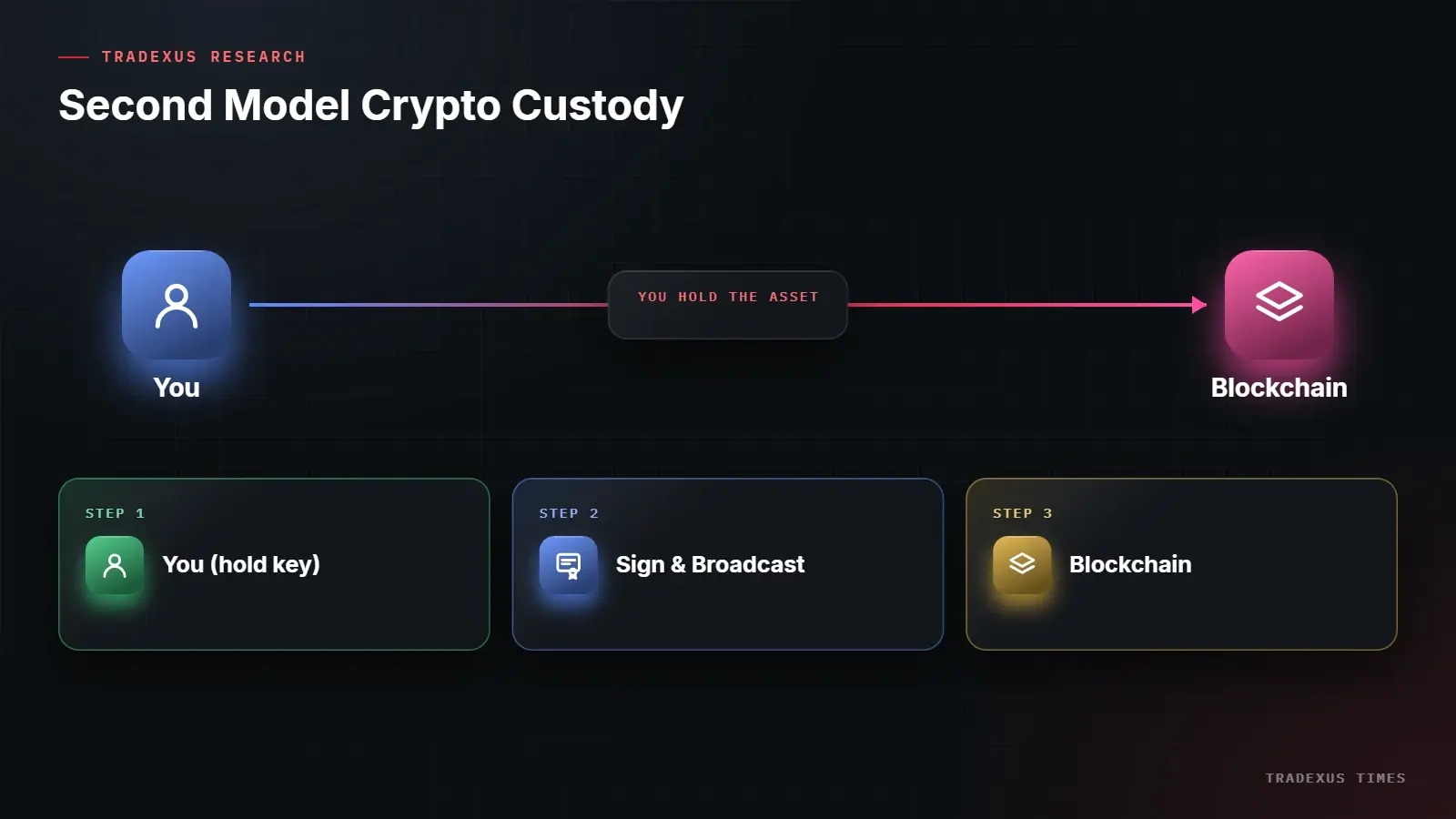
Another important decision is whether you want a company to manage your cryptocurrency or prefer to control everything yourself. A custodial wallet is managed by a third-party service, such as a cryptocurrency exchange. You typically access your account using an email address, password, and additional security verification. The service holds the private keys and manages the technical side of custody. This approach can be convenient, particularly for beginners who are uncomfortable managing recovery phrases. However, you depend on the provider's security, operational reliability, and withdrawal policies. A non-custodial wallet gives you direct control over your private keys and usually provides a recovery phrase during setup. This offers greater independence, but also greater responsibility. If you lose your recovery phrase and cannot access your wallet, there may be no customer support team capable of restoring your funds. Neither approach is automatically perfect: your decision should depend on how much control you want and how confidently you can manage your own security
The best crypto wallets to consider in 2026
There is no single wallet that is perfect for everyone. The best choice depends on which cryptocurrencies you own, how frequently you transact, and how much security you need. Here are several established options worth researching.
- MetaMask – Best for Ethereum and Web3
MetaMask is a popular self-custody wallet for Ethereum and compatible blockchain networks. It is particularly useful for interacting with decentralized applications, DeFi platforms, and Web3 services. It is a strong option if you regularly use Ethereum-based applications, but you should check network compatibility before transferring assets.
- Trust Wallet – Best for mobile convenience
Trust Wallet is a mobile-focused self-custody wallet supporting multiple blockchain networks and digital assets. Its accessible interface makes it appealing to people who want to manage different cryptocurrencies from one application. Always verify that the particular token and network you intend to use are supported.
- Exodus – Best for an accessible desktop experience
Exodus offers desktop and mobile wallet applications with a visually accessible interface for managing supported cryptocurrencies. It may suit users who prefer managing their portfolio on a computer as well as a smartphone. Check its current asset support and security features before choosing it.
- Ledger – Best for hardware-based security
Ledger offers physical hardware wallets designed to keep private keys protected from ordinary internet-connected environments. It is worth considering if you hold cryptocurrency for the long term and want an additional layer of protection. Compare individual models, supported assets, and backup procedures before purchasing.
- Trezor – Another strong cold-storage option
Trezor provides hardware wallets focused on self-custody and offline private-key protection. It is another option for long-term holders who want physical control of their wallet security. Compare supported cryptocurrencies, device features, and recovery options with other hardware wallets.
How to choose the right crypto wallet for your needs
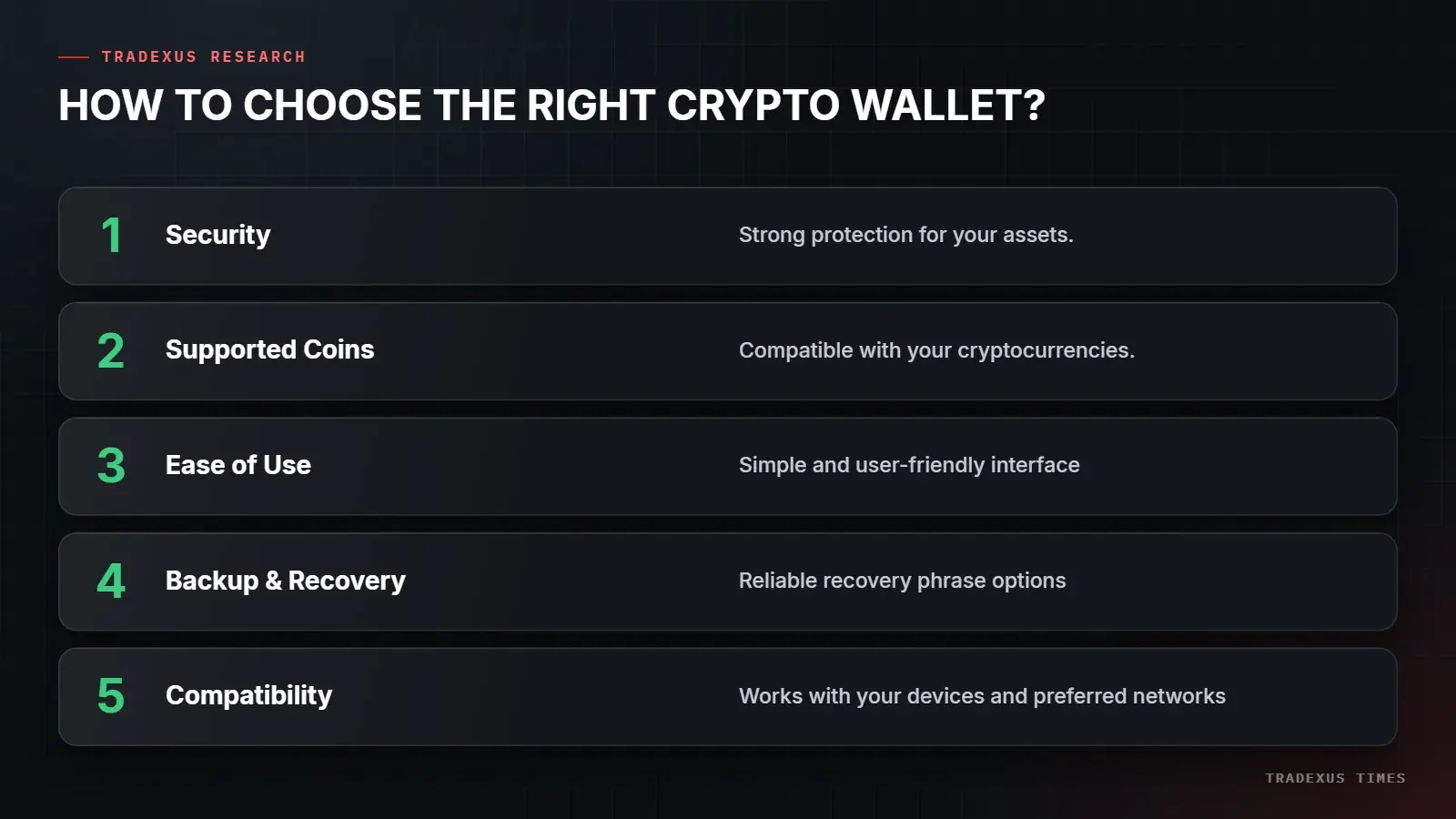
Choosing a crypto wallet becomes easier when you start with your actual requirements instead of simply selecting the most popular brand. If you are a beginner who wants to buy small amounts of cryptocurrency and learn how blockchain transactions work, a reputable mobile wallet may be a reasonable starting point. If you frequently interact with decentralized applications, NFTs, and DeFi platforms, look for a wallet that supports the networks and applications you use. If you plan to hold a substantial amount of cryptocurrency over several years, a hardware wallet may be more appropriate. You should also consider the wallet's reputation, development activity, security architecture, backup and recovery process, supported assets, and compatibility with your devices. Avoid choosing a wallet simply because an influencer recommends it or because it promises unusually high rewards. A wallet should be selected for its functionality and security, not its marketing.
Essential security tips every crypto wallet user should know
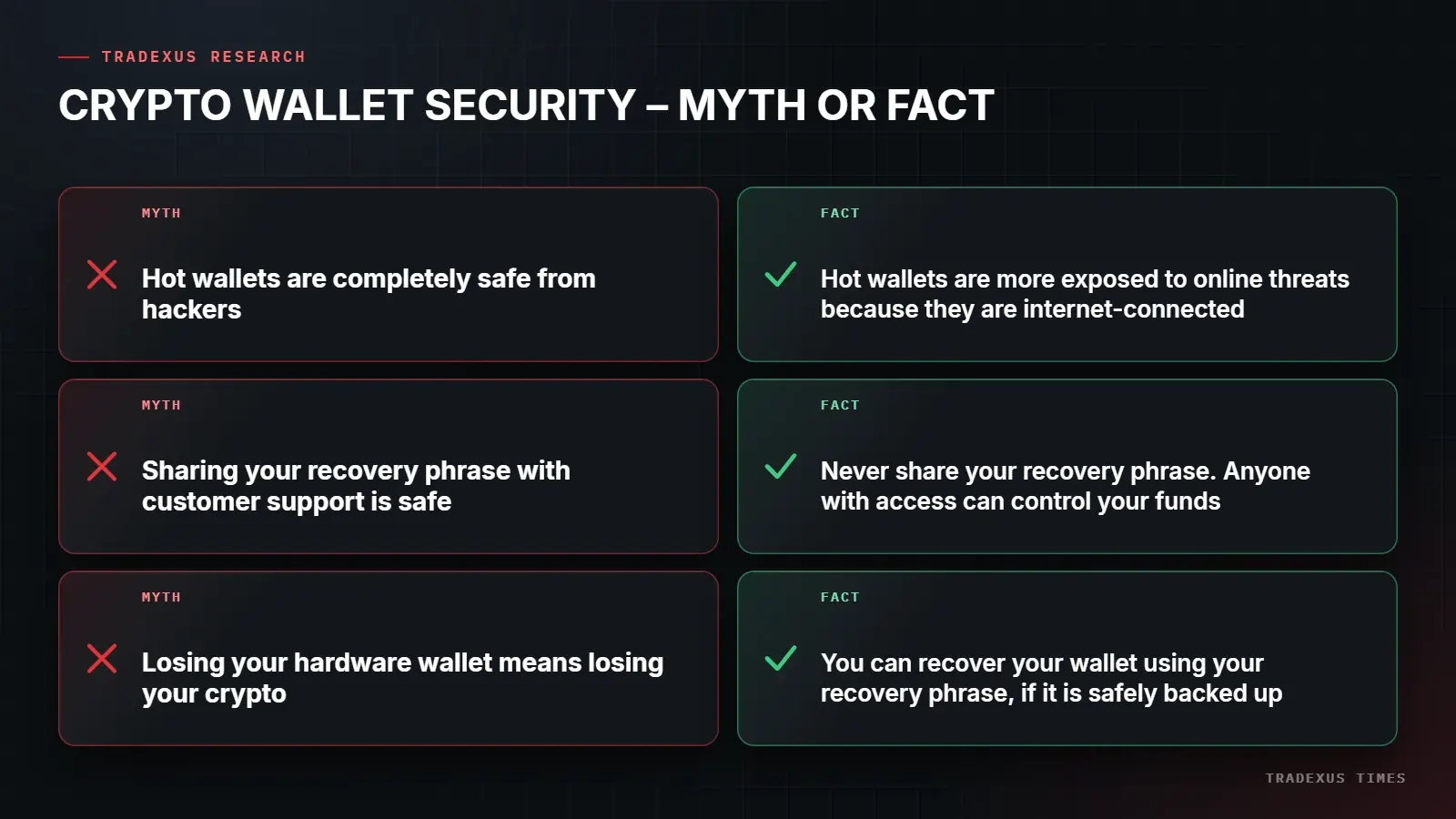
Even the best crypto wallet cannot protect you from every mistake. One of the most important security practices is protecting your recovery phrase, also called a seed phrase. This sequence of words can restore access to your wallet, so anyone who obtains it may be able to control your funds. Write it down and store it in a secure offline location. Avoid screenshots, email drafts, cloud storage, or sharing it with anyone claiming to be customer support. Use a strong, unique password for wallet applications and enable additional authentication wherever available. Always download wallet software from official websites or verified app stores, and be cautious of fake applications and phishing links. Before sending cryptocurrency, double-check the receiving address, blockchain network, and transaction details. For new or unfamiliar destinations, consider sending a small test transaction first. Remember that many blockchain transactions are irreversible, meaning a mistake or successful scam can result in permanent financial loss.
Should you use more than one crypto wallet?
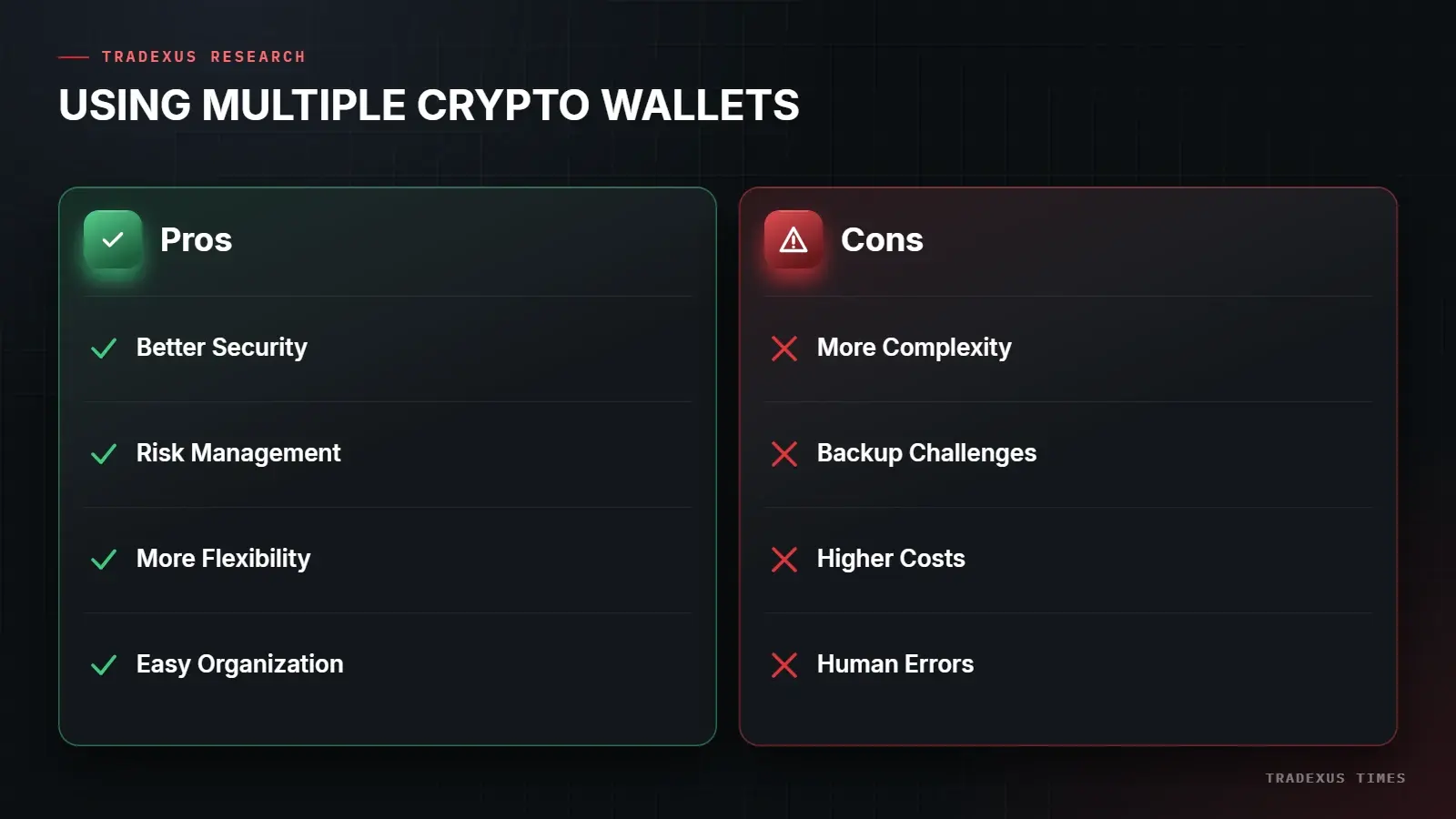
Interestingly, you do not have to rely on a single cryptocurrency wallet. In fact, using multiple wallets for different purposes can be a sensible security strategy. For example, you could use a mobile hot wallet for smaller everyday transactions and decentralized applications, while keeping your long-term cryptocurrency holdings in a separate hardware wallet. This approach helps separate your frequently used funds from your savings. You can also maintain different wallets for different blockchain ecosystems if your activities require them. However, managing multiple wallets requires careful organization, reliable backups, and an understanding of which recovery phrase belongs to each wallet. The goal is not to create unnecessary complexity, but to reduce the risk of losing all your assets through a single compromised account or device.
Conclusion: Which crypto wallet should you choose?
Choosing the right crypto wallet is ultimately about finding the right balance between convenience, security, and control. If you are just starting your cryptocurrency journey, a reputable mobile wallet can provide an accessible way to understand how digital assets work. If you actively use decentralized applications, MetaMask or another compatible Web3 wallet may be worth considering. If you are planning to hold significant cryptocurrency investments over the long term, a hardware wallet from an established manufacturer such as Ledger or Trezor deserves serious consideration.
| Your needs | Wallet type | Examples |
|---|---|---|
| Beginner-friendly access | Mobile hot wallet | Trust Wallet, Exodus |
| Ethereum and Web3 | Browser/mobile wallet | MetaMask |
| Long-term storage | Hardware wallet | Ledger, Trezor |
| Everyday transactions | Hot wallet | Mobile wallets |
| Maximum personal control | Non-custodial wallet | MetaMask, Trezor |
Most importantly, remember that your wallet's security depends not only on the technology you choose but also on how you use it. Protect your private keys, back up your recovery phrase, verify transactions, and never share sensitive wallet information with anyone.
The best crypto wallet isn't necessarily the most expensive or popular one. It's the one that matches your needs while allowing you to manage your digital assets responsibly.
Sources
- bitcoin.org/en/choose-your-wallet
- ethereum.org/security/
- help.coinbase.com/en/coinbase/getting-started/crypto-education/exchanges-self-custody-wallets
- bitcoin.org/en/secure-your-wallet
Education only — not financial advice. Figures are as of the dates given in the text and its sources. Our editorial policy · Report an error