CEX vs DEX: Which Crypto Exchange Is Better in 2026?
Discover the differences between centralized and decentralized crypto exchanges.


Key takeaways
- CEX exchanges offer easier crypto trading for beginners
- DEX platforms provide full asset control through self-custody
- CEXs deliver higher liquidity and faster transaction execution
- DEXs enhance privacy and support decentralized finance (DeFi)
- Choosing between CEX and DEX depends on your crypto trading goals
Introduction: Understanding the CEX vs DEX Debate
Cryptocurrency has transformed the financial world by introducing new ways to buy, sell, and exchange digital assets. However, as the crypto market has grown, choosing the right trading platform has become increasingly important. Two major types of platforms dominate the industry: Centralized Exchanges (CEXs) and Decentralized Exchanges (DEXs). Both allow users to trade cryptocurrencies, but they operate differently in terms of security, control, liquidity, privacy, and accessibility.
The debate over CEX vs DEX is not simply about which platform is technologically superior. It is about understanding which trading environment best meets an individual's needs. Beginners may prefer convenience and customer support, while experienced crypto users may prioritize financial independence and control over their assets.[1]
 Watch on our channelUnderstanding the CEX vs DEX Debate
What Is a Centralized Exchange (CEX)?
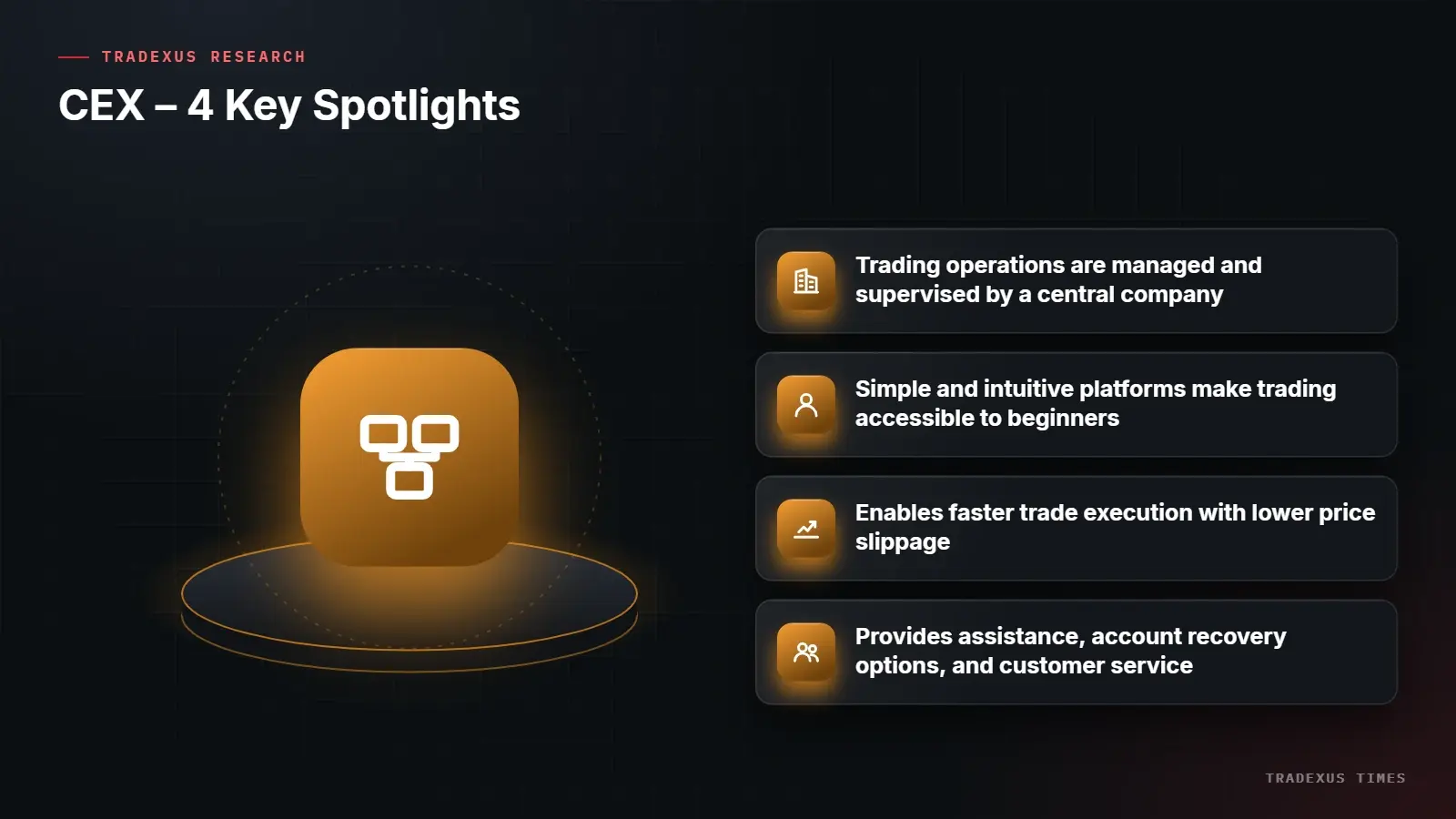
A Centralized Exchange, commonly known as a CEX, is a cryptocurrency trading platform operated by a company or organization. It acts as an intermediary between buyers and sellers, managing transactions, maintaining order books, and generally holding customers' cryptocurrency assets in custody. Popular examples include Binance , Coinbase , and Kraken. Users typically create accounts, complete identity verification (KYC), deposit funds, and begin trading through a website or mobile application. Because the exchange manages much of the technical infrastructure, customers can trade without directly interacting with blockchain networks for every transaction.[6]
One of the biggest advantages of CEX platforms is their user-friendly experience. They often provide advanced trading charts, limit orders, stop-loss tools, fiat currency deposits, customer support, and relatively straightforward account recovery. These features make centralized platforms particularly attractive to beginners and active traders. However, users must trust the exchange to safeguard their assets and operate responsibly. If the company experiences financial difficulties, security breaches, or operational problems, customers may face withdrawal restrictions or losses.[6]
What Is a Decentralized Exchange (DEX)?
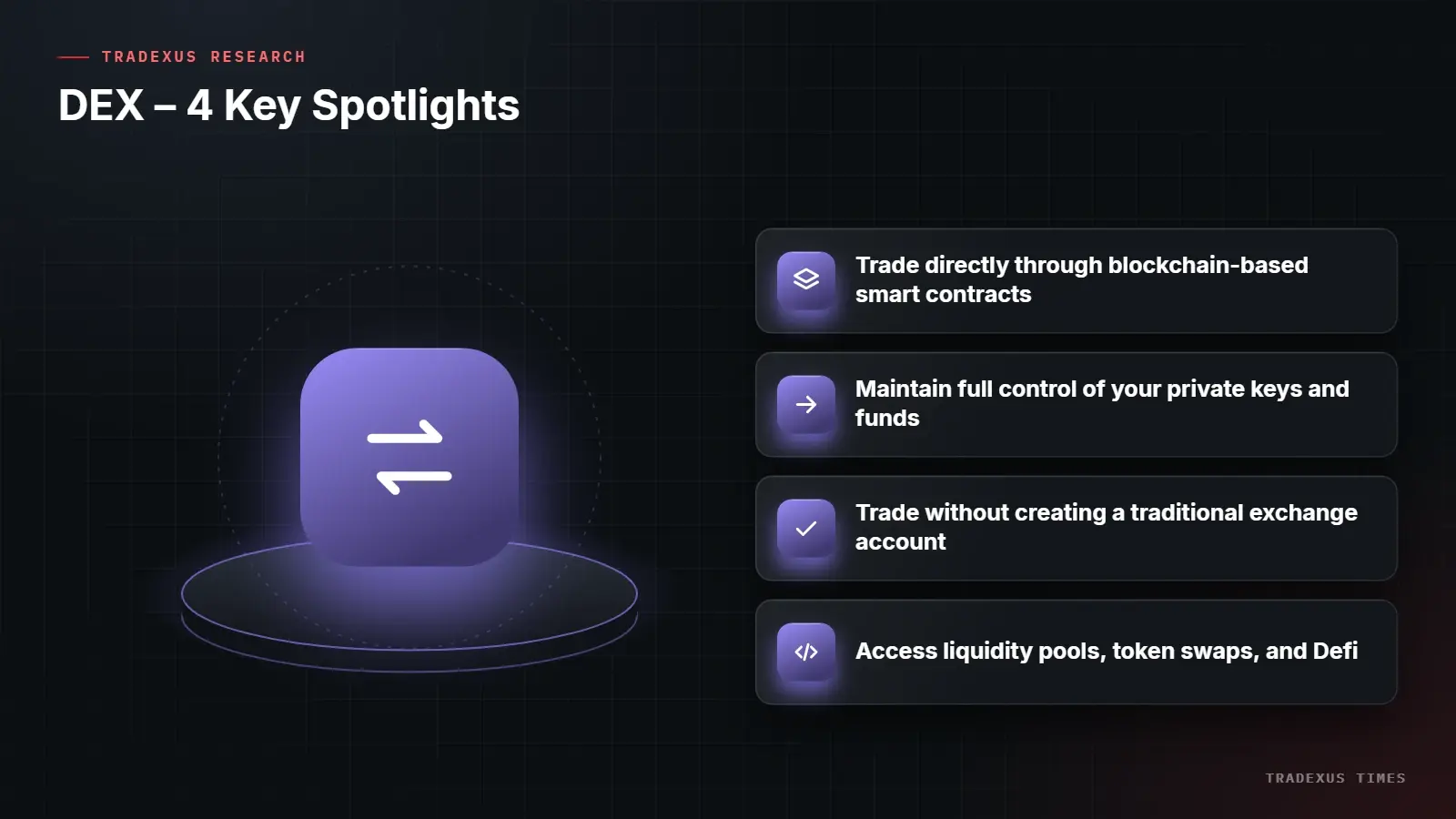
A Decentralized Exchange, or DEX, is a cryptocurrency trading platform that allows users to exchange digital assets directly through blockchain-based smart contracts. Unlike centralized exchanges, DEX platforms generally do not take custody of users' funds. Instead, traders connect their personal cryptocurrency wallets and authorize transactions themselves. Popular examples include Uniswap , PancakeSwap , and Curve Finance. These platforms commonly use automated market makers (AMMs) and liquidity pools rather than traditional centralized order books. Liquidity providers deposit cryptocurrency into pools, allowing other users to exchange tokens according to the protocol's pricing mechanism.[6]
The most important advantage of a DEX is financial control. Users generally retain ownership of their private keys and do not need to deposit their assets into an exchange-controlled account. Many DEXs also offer permissionless access, meaning users can interact with supported protocols without creating traditional exchange accounts. Nevertheless, decentralized trading requires greater technical knowledge. Users must understand wallet connections, blockchain networks, transaction fees, token approvals, and smart contract risks. Mistakes can be difficult or impossible to reverse, making careful research essential.[6]
CEX vs DEX: Key Differences
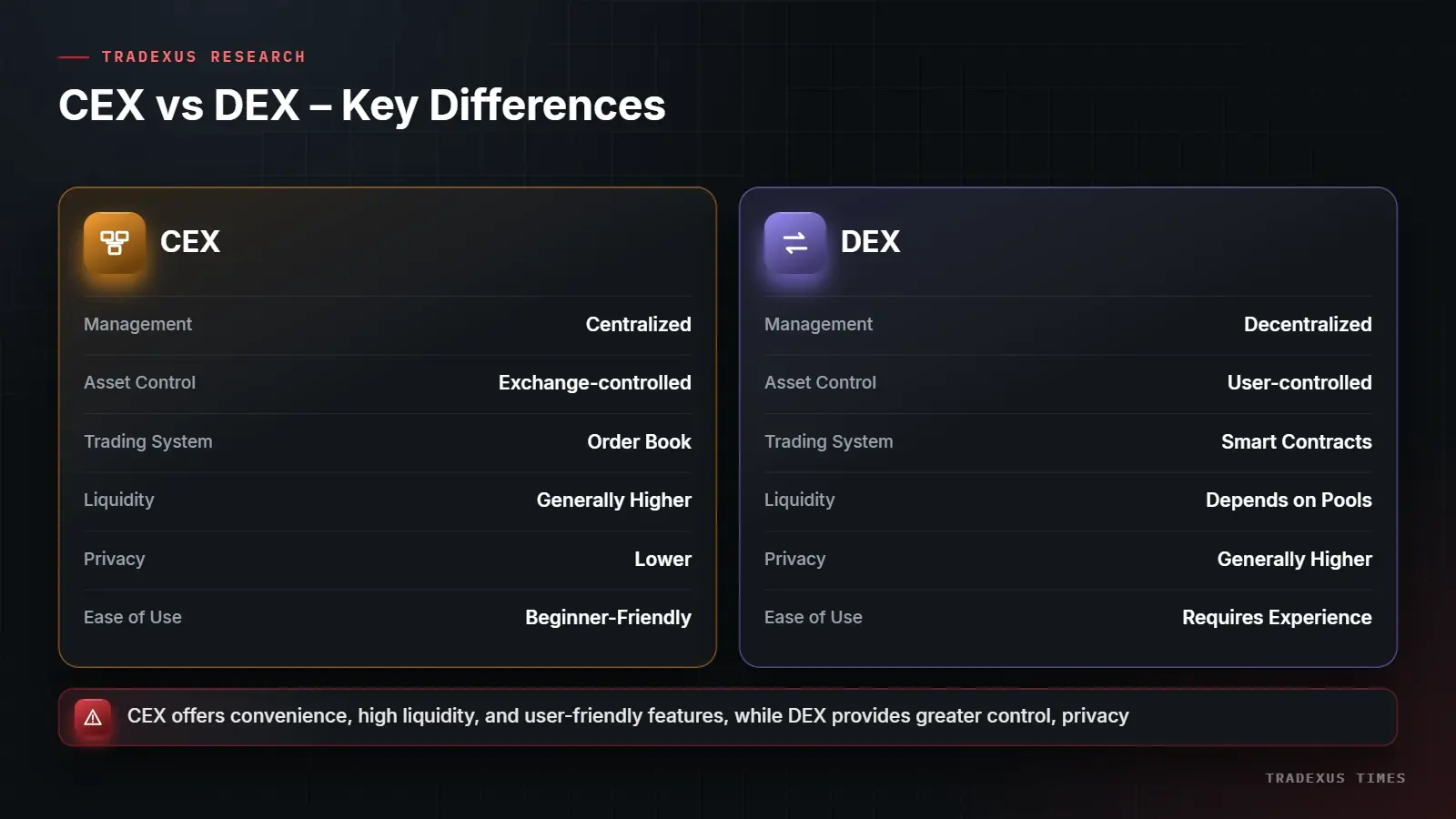
Although both exchange models serve the same fundamental purpose, their operating systems create important differences. A CEX is managed by a company, while a DEX relies on blockchain technology and smart contracts. CEX users generally surrender direct control of their private keys to the exchange, whereas DEX users usually maintain control through their personal wallets. Centralized platforms typically offer more convenient account recovery, while decentralized platforms place responsibility for wallet security and recovery phrases on individual users.
Another important difference is how transactions are processed. CEXs generally use centralized order books to match buyers and sellers, while many DEXs use liquidity pools and automated market makers. CEX platforms often have deeper liquidity for major trading pairs, although leading DEXs have become increasingly competitive. Trading costs also vary: CEX users may pay trading commissions, spreads, and withdrawal fees, while DEX users may pay swap fees, network gas fees, and costs resulting from slippage. Therefore, the cheapest option depends on the cryptocurrency, blockchain, trading amount, and market conditions.
Security: Which Exchange Is Safer?
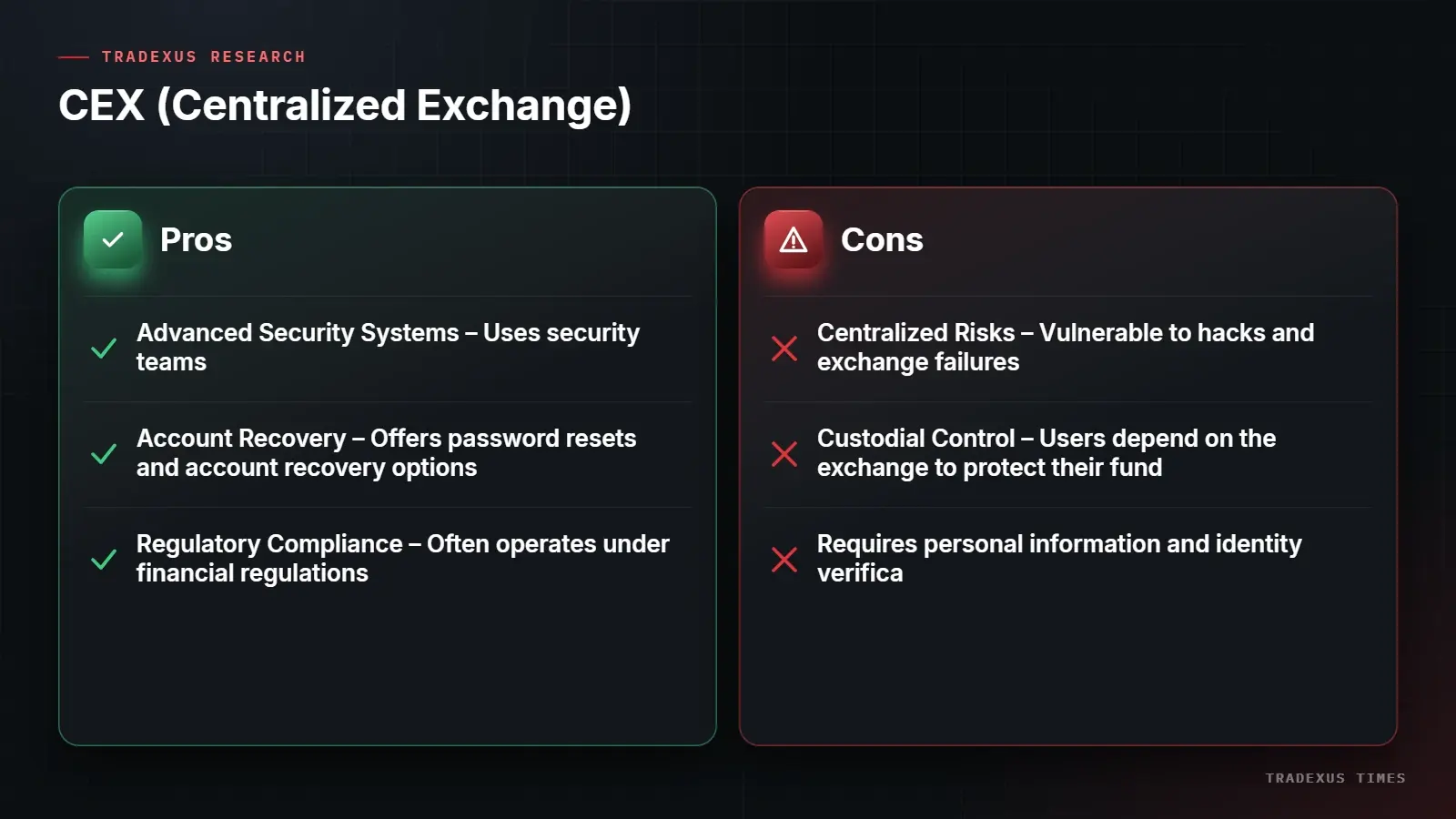
Security is arguably the most important factor when choosing between centralized and decentralized exchanges. CEX platforms usually invest in cybersecurity teams, account monitoring, cold storage, and other protective measures. However, because they hold customer assets, they create a concentration of risk. A successful hack, internal misconduct, insolvency, or operational failure can affect many customers simultaneously. Even a well-known exchange is not automatically risk-free, and users should investigate its regulatory status, custody arrangements, withdrawal policies, and financial transparency.
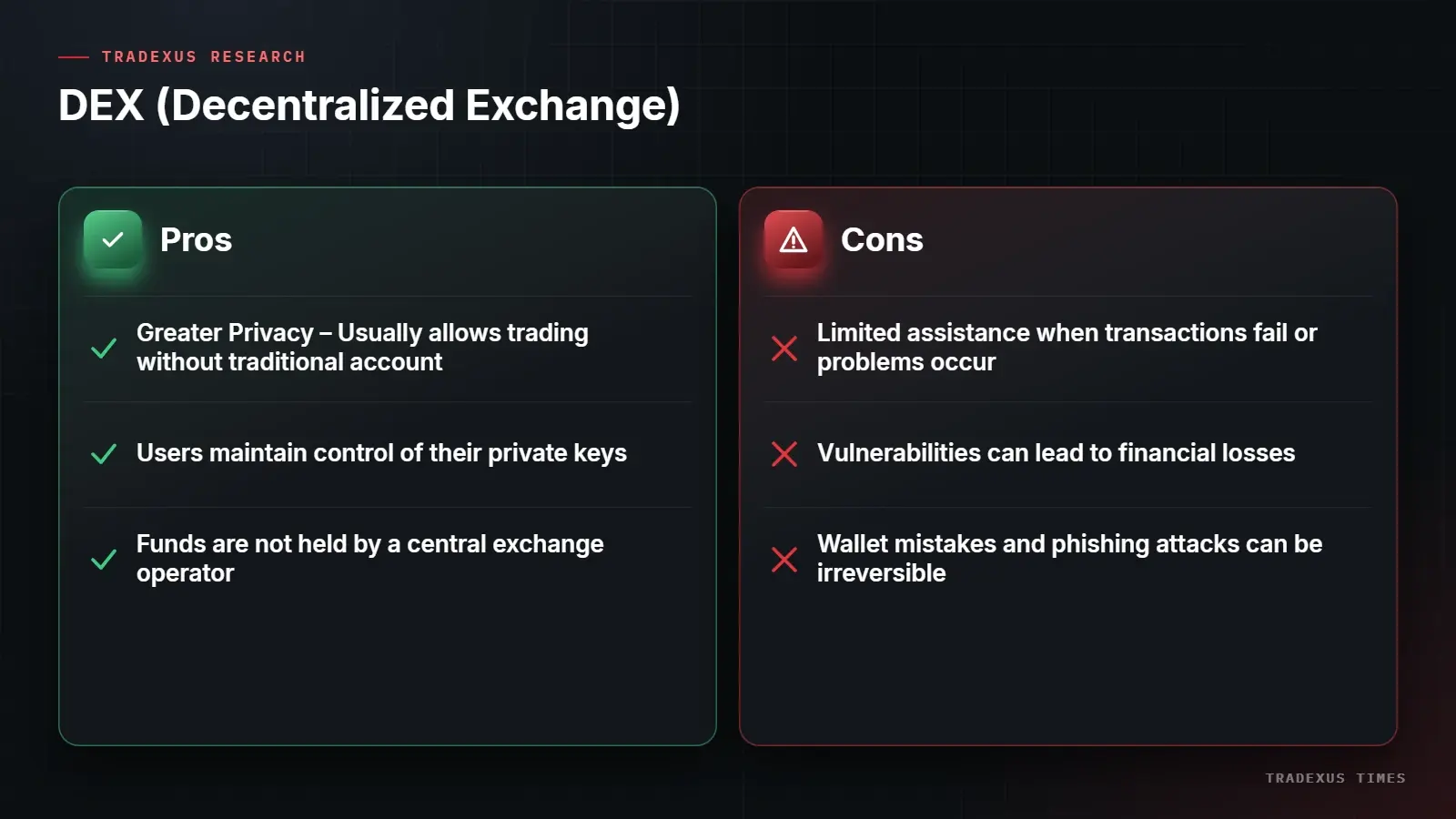
DEX platforms eliminate the need to trust a centralized exchange with custody of funds, but this does not make them completely safe. Smart contract vulnerabilities, malicious tokens, phishing websites, compromised wallets, and fraudulent projects can cause substantial losses. Blockchain transactions are generally irreversible, so sending funds to the wrong address or approving a malicious transaction can be extremely costly. The US Securities and Exchange Commission's investor education guidance also emphasizes that self-custody gives investors control but places responsibility for private-key protection on them. Ultimately, CEX security depends heavily on the exchange operator, while DEX security depends on the protocol, wallet, and user's decisions.
Tradexus Times: Your Gateway to Crypto Market Intelligence and Exchange Opportunities
Understanding the differences between Centralized Exchanges (CEXs) and Decentralized Exchanges (DEXs) is essential for navigating the evolving cryptocurrency market. However, staying informed goes beyond simply choosing where to trade.
Crypto users also need access to relevant market information, exchange updates, promotional campaigns, and emerging opportunities across the digital asset ecosystem.
Tradexus Times aims to bridge this information gap by bringing crypto-related insights and exchange opportunities together in one platform. Its dedicated campaigns section helps users discover exchange promotions, explore potential rewards, review participation requirements, and stay informed about ongoing campaigns.
Whether you're an active trader, a blockchain enthusiast, or someone exploring the crypto ecosystem, Tradexus Times offers another resource to help you stay connected with developments across the exchange landscape.
Explore the crypto ecosystem with Tradexus Times: Discover the Latest Crypto Exchange Campaigns.
Always verify campaign details through official exchange sources and carefully review the associated terms and conditions before participating.[7]
Liquidity, Trading Fees, and Performance
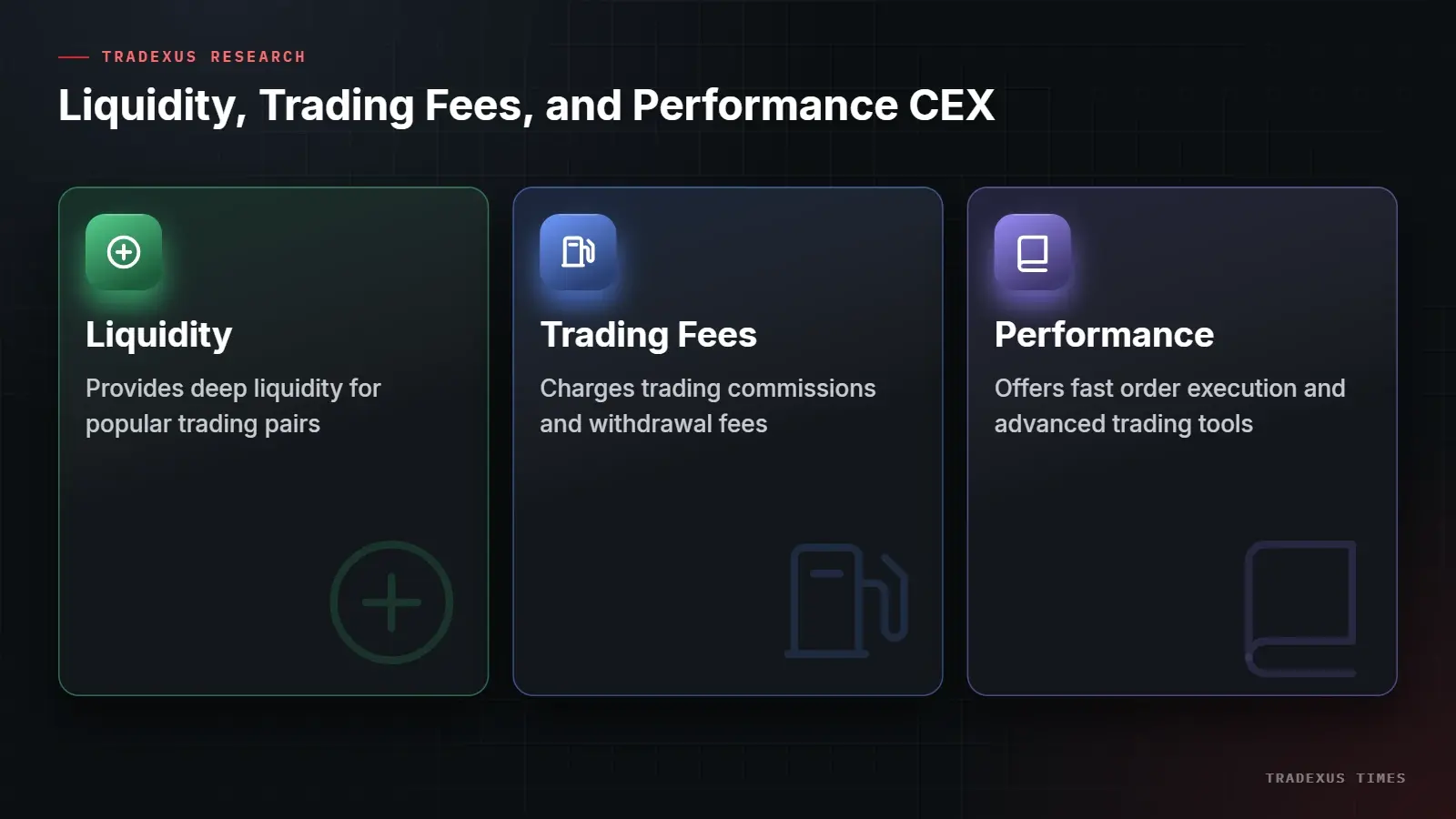
Liquidity refers to how easily an asset can be bought or sold without significantly changing its market price. Centralized exchanges generally have an advantage in liquidity, particularly for popular cryptocurrencies such as Bitcoin and Ethereum. High liquidity can help traders execute large orders more efficiently, with less price impact and narrower bid-ask spreads. CEX platforms also tend to provide advanced trading features, including margin trading, futures, and sophisticated order types. However, these services vary by exchange and jurisdiction.
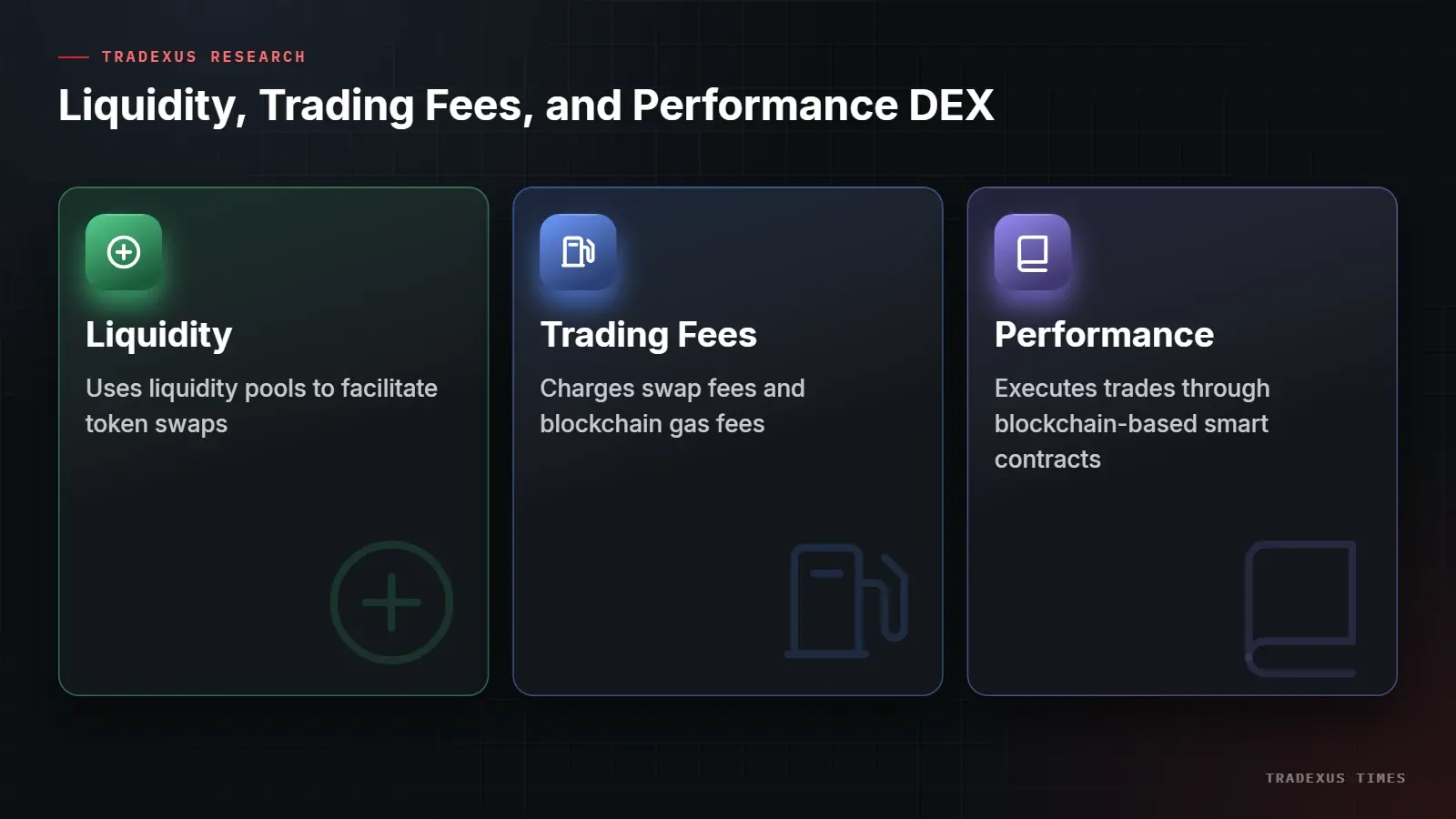
DEX liquidity has improved significantly, particularly across popular blockchain ecosystems and major DeFi protocols. Nevertheless, smaller liquidity pools can result in substantial price impact, especially when trading less popular tokens or executing large transactions. DEX traders must also consider blockchain network fees and slippage. Importantly, neither CEX nor DEX is automatically cheaper. A centralized exchange might offer low trading commissions but charge withdrawal fees, while a decentralized exchange might have a low swap fee but expensive network transactions. Comparing the total cost of a trade is therefore more useful than looking at a single advertised fee.
Privacy, Accessibility, and Regulation
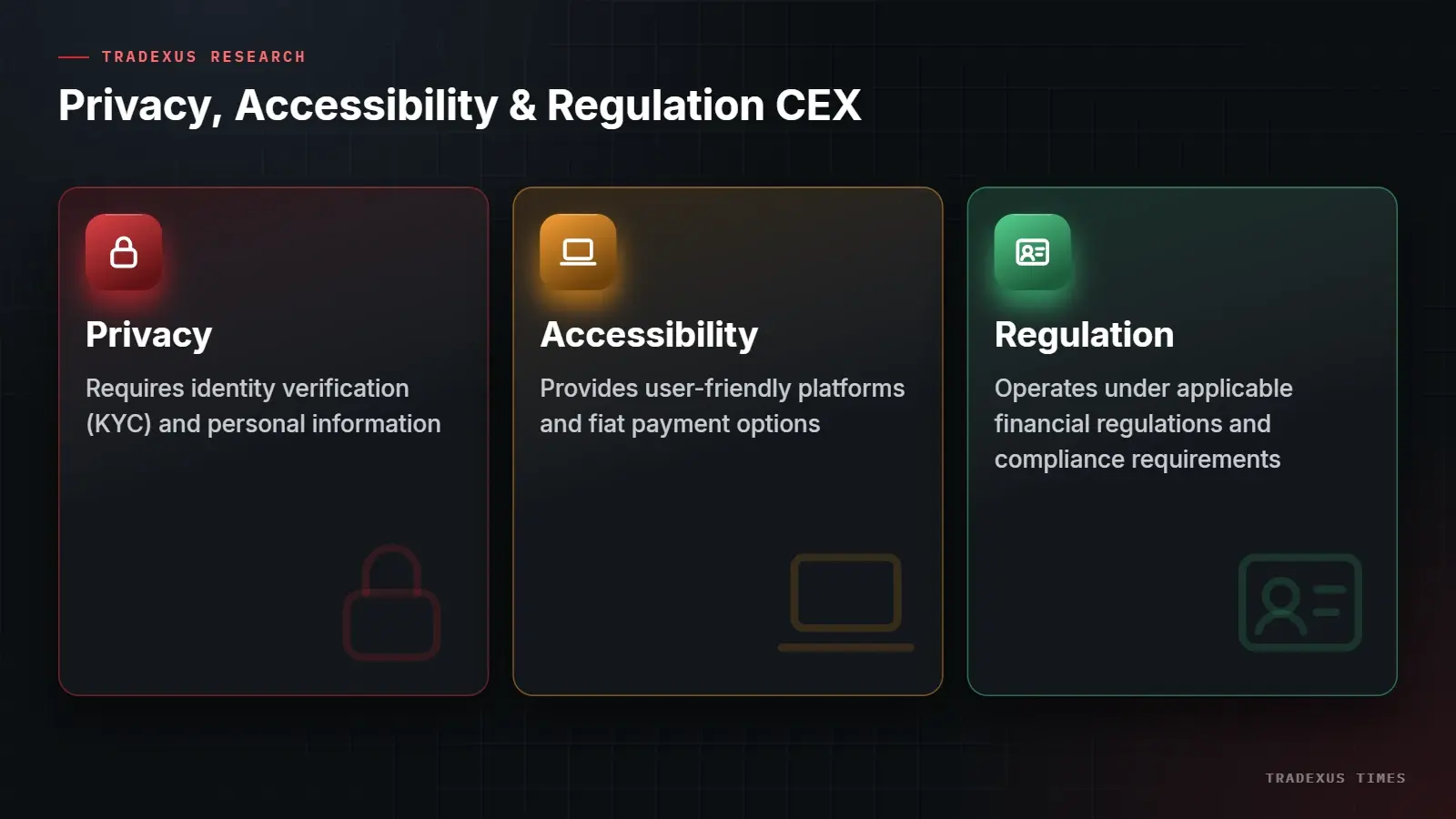
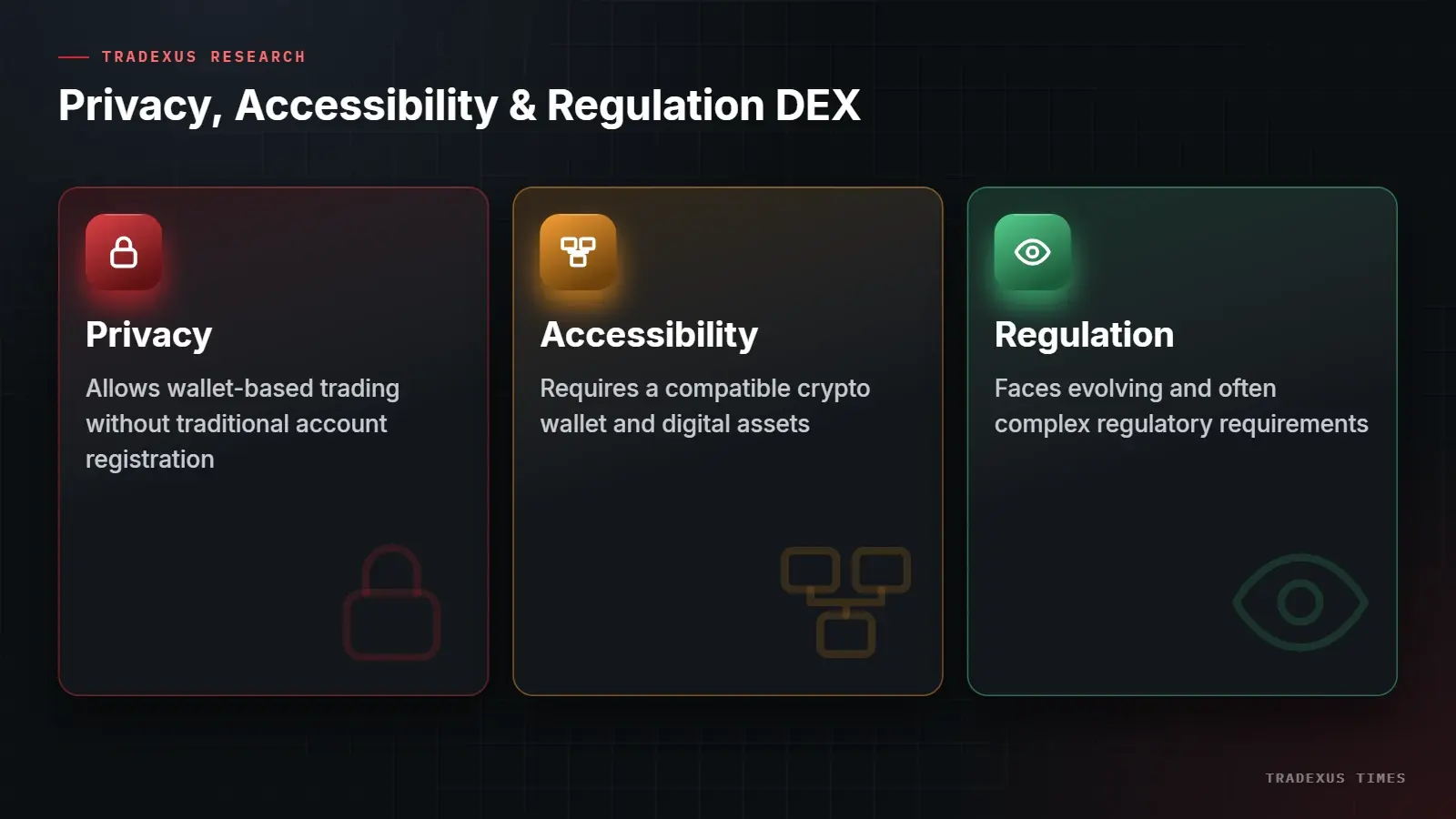
Privacy is another major consideration in the CEX vs DEX discussion. Most regulated centralized exchanges require users to complete Know Your Customer (KYC) procedures, which involve providing personal information and sometimes identity documents. These requirements help platforms comply with applicable anti-money-laundering and financial regulations, but they also mean that users must share sensitive information with the exchange. DEX protocols often allow users to connect compatible wallets and trade without opening a conventional account. However, this does not guarantee complete anonymity: blockchain transactions are generally public, and wallet activity can sometimes be linked to real-world identities.
Accessibility also differs between the two models. CEX platforms are usually more convenient for purchasing cryptocurrency with traditional currencies such as euros and US dollars. DEX platforms generally require users to already possess cryptocurrency and understand how to transfer assets between wallets and networks. Regulatory treatment also varies across countries and can change over time. In Europe, for example, the Markets in Crypto-Assets Regulation (MiCA) establishes a regulatory framework for many crypto-asset service providers. Users should therefore check whether a platform is authorized or otherwise legally available in their jurisdiction rather than assuming that every exchange can be used everywhere.
Which Crypto Exchange Is Better for Different Types of Users?
The best exchange depends on your experience, trading goals, and attitude toward financial responsibility. Beginners often find CEX platforms more suitable because they provide simple interfaces, customer support, fiat deposits, and easier account recovery. Active traders may also prefer CEXs because of their liquidity, advanced charting tools, and order execution features. On the other hand, experienced cryptocurrency users, DeFi enthusiasts, and people who value self-custody may prefer DEX platforms. They provide access to blockchain-based financial applications and a broader range of on-chain tokens, although this comes with additional technical and security responsibilities.
Here is a practical comparison:
| User requirement | Better choice |
|---|---|
| Cryptocurrency beginners | CEX |
| Easy fiat deposits and withdrawals | CEX |
| Advanced order-book trading | CEX |
| Self-custody of assets | DEX |
| Access to DeFi applications | DEX |
| Permissionless token swapping | DEX |
| Customer support and account recovery | CEX |
| Direct on-chain trading | DEX |
These are general tendencies, not guarantees. Some centralized exchanges offer wallet-based products, while some decentralized protocols provide advanced trading tools. Always evaluate the actual platform rather than relying exclusively on its category.
Can You Use Both CEX and DEX Platforms?
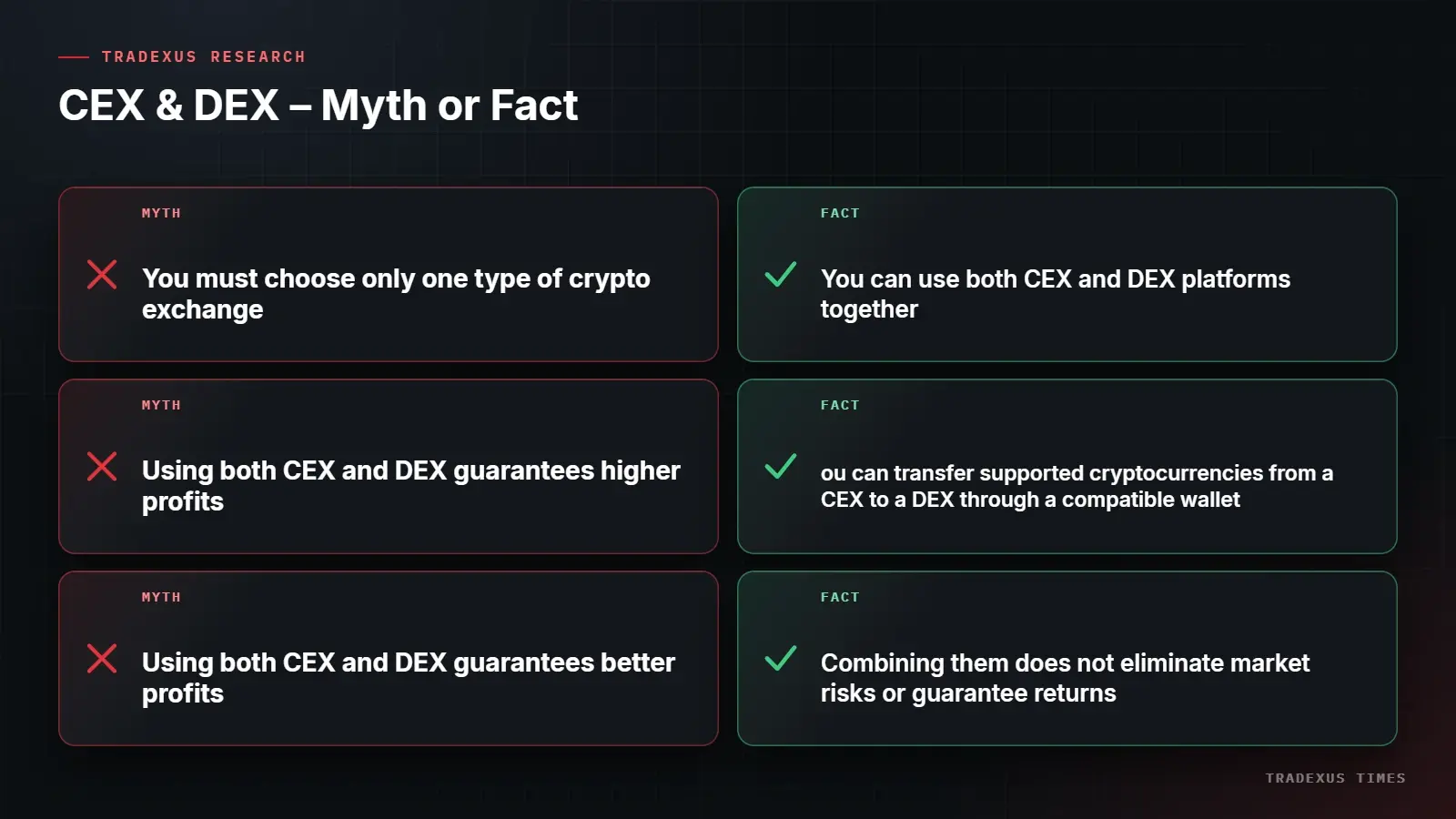
Absolutely. In fact, combining centralized and decentralized exchanges can be a practical strategy. A user might purchase Bitcoin or Ethereum through a reputable CEX using euros, transfer the cryptocurrency to a self-custody wallet, and then connect that wallet to a DEX to access other tokens or decentralized finance applications. This approach combines the convenience of centralized services with the financial control and flexibility of decentralized trading.
However, transferring cryptocurrency requires careful attention. Users must select the correct blockchain network, verify the receiving wallet address, understand withdrawal and network fees, and check token compatibility. Sending assets through an unsupported network can result in permanent losses. It is also sensible to test a small transfer before moving a significant amount. Most importantly, never share your wallet's recovery phrase or private keys with anyone, including people claiming to represent an exchange or support team.
Final Verdict: CEX or DEX – Which One Wins?
There is no universal winner in the CEX vs DEX debate because both exchange models solve different problems. Centralized exchanges are generally better for convenience, fiat currency access, customer support, and advanced trading features. Decentralized exchanges are better suited to users who prioritize self-custody, permissionless access, and participation in decentralized finance. The growth of DeFi and on-chain trading continues to make DEX platforms increasingly important, while CEX platforms remain essential gateways into the cryptocurrency ecosystem.
Our recommendation: If you are new to cryptocurrency, consider starting with a reputable, appropriately regulated CEX and learning how cryptocurrency wallets work. As your knowledge increases, explore established DEX platforms using small amounts of money while learning about smart contracts, transaction fees, and wallet security. Experienced users may benefit from using both platforms according to their individual needs.
Quick comparison: CEX vs DEX:
| Category | CEX | DEX |
|---|---|---|
| Ease of use | Excellent | Moderate |
| Self-custody | Usually no | Yes |
| Liquidity | Generally high | Depends on pool |
| Privacy | Generally lower | Generally higher |
| Fiat support | Strong | Limited |
| Customer support | Usually available | Usually limited |
| Smart contract risk | Not the primary trading risk | Important |
| Account recovery | Usually possible | Usually unavailable |
| DeFi access | Limited or integrated | Native |
Ultimately, the smartest approach is not necessarily choosing one exchange over the other. It is understanding their strengths, recognizing their risks, and using the right platform for the right purpose.
Sources
- coinbureau.com/education/centralized-vs-decentralized-crypto-exchanges
- chainalysis.com/glossary/decentralized-exchange-dex/
- developers.uniswap.org/docs/get-started/concepts/traders/swaps
- investor.gov/introduction-investing/general-resources/news-alerts/alerts-bulletins/investor-bulletins/crypto-asset-custody-basics-retail-investors-investor-bulletin-0
- assets.coingecko.com/reports/2026/CoinGecko-2026-CEX-DEX-Trading-Activity-Report.pdf
- data.tradexustimes.com/exchanges
- tradexustimes.com/campaigns
Education only — not financial advice. Figures are as of the dates given in the text and its sources. Our editorial policy · Report an error