Ethereum

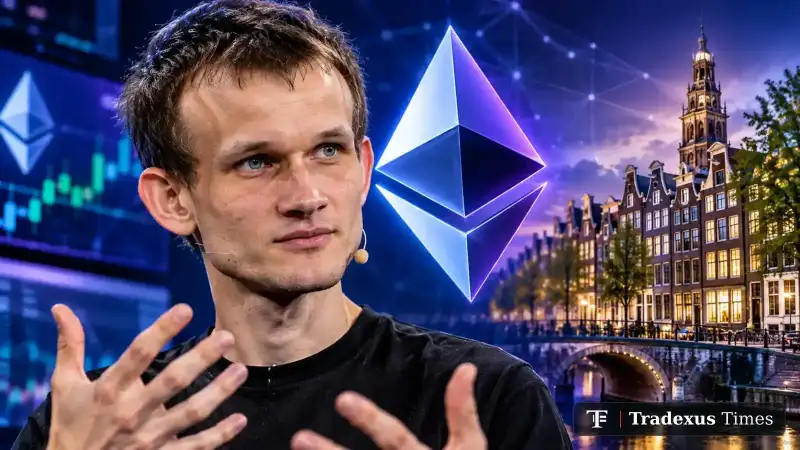
Ethereum co-founder Vitalik Buterin is challenging the growing emphasis on transaction-fee burning as a measure of ETH's economic value, arguing that the network's long-term strength should be evaluated through its resilience, security, openness and utility rather than the amount of tokens removed from circulation. His position comes as Ethereum faces renewed debate over declining fee revenue and a technical setback affecting preparations for its upcoming Glamsterdam upgrade.
The discussion highlights a potential shift in how Ethereum's economic model is understood. Under EIP-1559, a portion of transaction fees is burned, creating a mechanism through which network activity can reduce ETH's circulating supply. During periods of elevated on-chain demand, this mechanism has contributed to deflationary conditions. However, Buterin argues that historical expectations surrounding fee burning have been overstated, with the strongest periods of ETH supply reduction closely tied to speculative activity and temporary market cycles.
His argument challenges the assumption that Ethereum must maintain consistently high transaction fees to preserve ETH's long-term value. Such an approach could create incentives to restrict blockspace or prioritize fee generation over network accessibility. In Buterin's view, turning fee extraction into the primary measure of protocol success risks pushing Ethereum toward a more commercially managed infrastructure, potentially undermining the decentralization principles that distinguish its underlying architecture.
Instead, Buterin is promoting what he describes as CROPS: censorship resistance, capture resistance, open source, privacy and security. The framework places greater emphasis on Ethereum's fundamental infrastructure characteristics and its ability to remain a dependable settlement and execution layer. From this perspective, ETH's store-of-value proposition would derive less from the amount of transaction fees burned and more from confidence in the network's long-term credibility and resilience.
The distinction has important implications for Ethereum's capacity expansion strategy. The proposed Glamsterdam architecture is associated with efforts to increase blockspace availability, with EIP-8037 targeting fee calibration and EIP-7928 addressing parallel block production. The stated ambition is to raise the gas limit toward 200 million units, potentially creating substantially more transaction capacity. Greater blockspace availability could reduce transaction costs and improve accessibility, but it could also weaken the fee-burning mechanism during periods of insufficient demand.
That trade-off is central to the current debate. If Ethereum successfully expands capacity while maintaining meaningful network adoption, lower transaction costs could support broader usage and strengthen its infrastructure position. However, if demand fails to grow alongside available blockspace, lower fees could translate into weaker ETH burning and reduce one of the supply-side mechanisms that has historically attracted market attention.
Glamsterdam's development has also encountered a technical complication. A testnet launch reportedly exposed a bug in the fee-recalculation mechanism, prompting a halt in the hard-fork process. The issue highlights the engineering challenges involved in modifying Ethereum's core execution and fee architecture. Although the available information does not establish the bug's full technical impact or a revised deployment schedule, the setback reinforces the importance of testing and implementation reliability as the network pursues more ambitious capacity targets.
Buterin's position also received support from Solana co-founder Anatoly Yakovenko, who argued that transaction fees should not be treated as the product itself. His perspective reflects a broader infrastructure debate: blockchain networks ultimately need to provide useful services rather than depend on maintaining expensive access to blockspace. While Ethereum and Solana have different technical architectures and economic models, the shared emphasis on end-user value suggests that fee generation alone is an incomplete measure of blockchain competitiveness.
For ETH, the emerging distinction is between monetary mechanics and underlying network utility. EIP-1559 remains part of Ethereum's economic architecture, but Buterin's argument suggests that the community should not treat a particular level of token burning as a requirement for long-term success. A network that becomes cheaper and more accessible could potentially strengthen its broader economic relevance even if its deflationary characteristics become less pronounced.
The market's immediate focus will therefore extend beyond ETH's price and fee-burning statistics. The successful resolution of the Glamsterdam testnet issue, the implementation of its proposed capacity improvements and the network's ability to attract sustained demand will help determine whether Ethereum can reconcile lower transaction costs with a credible long-term economic proposition. At the center of the debate is a fundamental question: whether Ethereum's value should be measured primarily through scarcity generated by fees or through the resilience and utility of the infrastructure supporting the asset.