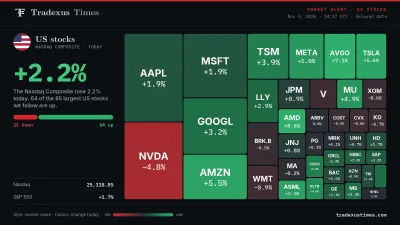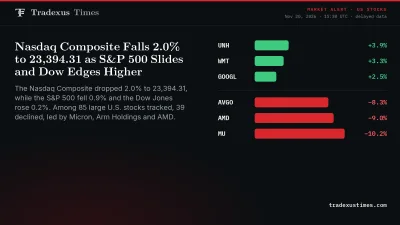
U.S. technology stocks have recorded their steepest weekly decline since the COVID-19 market turmoil of 2020, highlighting growing pressure on a sector that has benefited from strong enthusiasm surrounding artificial intelligence. The sell-off reflects mounting investor concerns over elevated valuations among AI-related companies and the possibility of higher U.S. interest rates.
The combination of valuation concerns and shifting monetary policy expectations is creating a more challenging environment for technology equities. Companies associated with artificial intelligence have attracted substantial market attention, but elevated valuations also leave their share prices more exposed to changes in investor sentiment. As expectations become less favorable, even companies positioned within major technological growth themes may face increased selling pressure.
In this story
2 assets
Interest rate concerns add another layer of uncertainty. The possibility of higher borrowing costs can weigh on the valuation of growth-oriented companies, particularly those whose market prices reflect expectations of substantial earnings expansion in the future. This dynamic could make investors more selective in their exposure to technology stocks, placing greater emphasis on earnings performance and the ability of companies to justify their valuations.
Goldman Sachs has warned that the current wave of selling may not yet be over, raising the possibility of additional downside across the equity market. The warning suggests that recent losses should not necessarily be viewed as an isolated correction, particularly while the underlying concerns surrounding AI valuations and U.S. monetary policy remain unresolved.
For digital-asset markets, the development is also relevant because broader financial-market sentiment can influence risk appetite across speculative assets. However, the decline in technology stocks alone does not establish that cryptocurrency markets will follow the same trajectory. The extent of any spillover will depend on how investors respond to changing interest rate expectations and whether broader selling pressure spreads beyond equities.
The next phase of the market correction will depend on whether valuation concerns begin to ease and whether expectations for U.S. interest rates become more favorable. Until then, Goldman Sachs' warning reinforces the possibility that technology stocks could remain vulnerable to further volatility, particularly if investors continue reducing exposure to highly valued growth companies.