Bitcoin

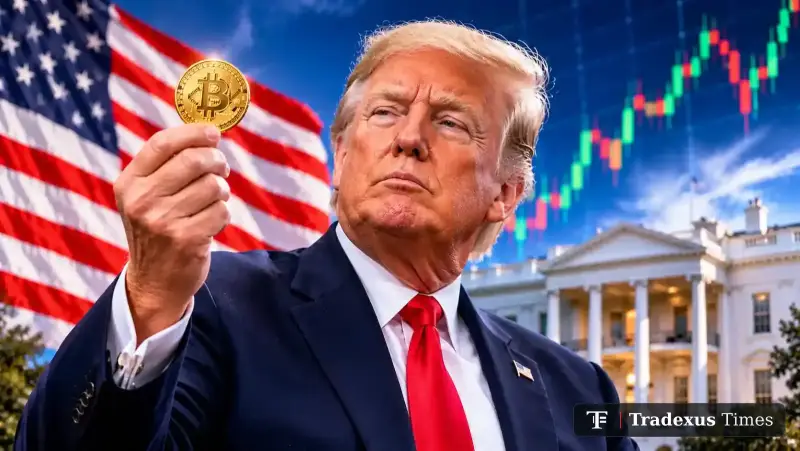
US President Donald Trump remains interested in acquiring Bitcoin for the country’s Strategic Bitcoin Reserve, according to Patrick Witt, a former adviser to the White House Crypto Council. Witt said the administration has discussed potential ways to increase the government’s Bitcoin holdings, although direct purchases from the open market continue to face legal and political obstacles.
The central challenge is the federal government’s authority to allocate public funds. Witt noted that spending decisions involving federal budgets fall under Congress’s jurisdiction, creating restrictions on the administration’s ability to purchase Bitcoin directly. Any effort to expand the reserve through market acquisitions would therefore need to address these legal and budgetary constraints.
The Strategic Bitcoin Reserve was established in March 2025 and is currently composed primarily of Bitcoin seized by the US government. No direct purchases from the open market have been announced so far, leaving the reserve dependent largely on assets already held through government seizures.
The political outlook may make further expansion more difficult. Witt argued that the Democrats’ victories in both chambers of Congress in the November 3 midterm elections could complicate efforts to turn the reserve initiative into legislation. A divided political environment, particularly one in which the administration faces opposition in Congress, could limit the scope of any proposal requiring legislative approval.
The distinction between retaining seized Bitcoin and purchasing additional assets is significant. The former allows the government to build reserves without making new market purchases, while the latter would raise questions about spending authority, funding mechanisms and congressional oversight.
For Bitcoin markets, continued presidential interest signals that the strategic reserve remains part of the administration’s broader digital-asset agenda. However, political support alone does not establish a clear path toward direct acquisitions. The key issue will be whether the administration can identify a legally viable mechanism to expand its holdings and secure sufficient congressional backing.
Until such a framework emerges, the US reserve is likely to remain primarily based on seized Bitcoin rather than publicly funded purchases. The next important development will be whether discussions within the administration produce a concrete legislative or policy proposal.