Global financial markets faced a broad wave of selling on Monday, November 16, with approximately $2.2 trillion wiped from the combined market value of equities, precious metals and Asian stock markets. The decline was driven by three major sources of concern: fears surrounding artificial intelligence valuations, tighter monetary policy expectations and renewed trade and banking uncertainty.
The first factor was growing anxiety over a potential AI investment bubble. Concerns surrounding Nvidia's leadership, warnings from the Federal Reserve about economic risks associated with artificial intelligence, and investor caution ahead of Nvidia's financial results and Anthropic's anticipated IPO added pressure to technology-related assets. Market participants increasingly questioned whether the strong valuations and investment expectations surrounding the AI sector could be sustained.
In this story
2 assets
The second source of pressure came from monetary policy. Rising US Treasury yields, a stronger dollar and increasing expectations of another Federal Reserve interest rate hike weakened demand for growth-oriented stocks and precious metals. Higher borrowing costs can reduce the attractiveness of companies whose valuations depend heavily on future earnings, while a stronger dollar and rising yields can create additional headwinds for gold and silver.
The third factor involved escalating trade tensions and banking-sector concerns. New US restrictions on semiconductor exports to China added uncertainty to the outlook for technology companies and international trade. At the same time, disruptions affecting the online services of several major US banks raised concerns about financial-sector reliability and contributed to broader investor caution.
The combination of these developments created pressure across several asset classes rather than concentrating losses in a single sector. Technology stocks faced valuation concerns, precious metals were exposed to changing interest-rate expectations, and Asian markets remained sensitive to trade and global growth risks.
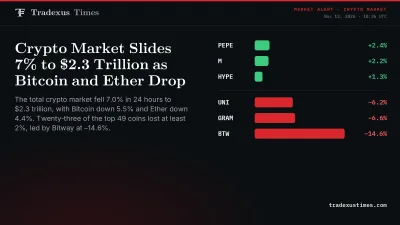
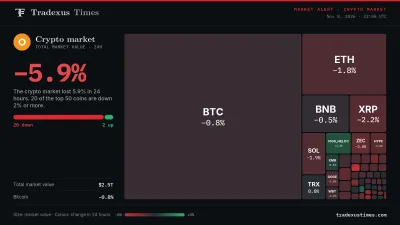
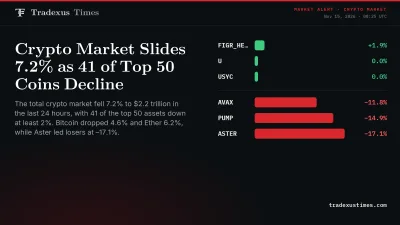
For cryptocurrency markets, these conditions could also create additional headwinds. A stronger dollar, higher Treasury yields and reduced appetite for risk may weaken demand for Bitcoin and other digital assets. However, the direction of crypto prices will also depend on ETF flows, leverage and market-specific developments.
Investors will now be watching Nvidia's financial results, Federal Reserve signals, US-China trade developments and the stability of banking services. Whether the sell-off develops into a broader correction or stabilizes will depend on how these risks evolve and whether investor confidence recovers.