Bitcoin

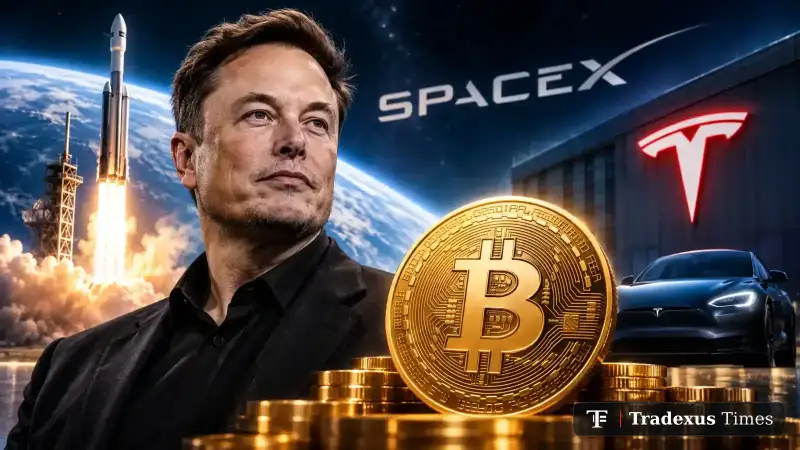
A potential merger between SpaceX and Tesla could place approximately 30,220 bitcoin under a single corporate structure, bringing Elon Musk’s two largest companies together with a combined digital-asset position worth roughly $2.1 billion at a bitcoin price near $69,000. While the proposed transaction would not necessarily involve additional cryptocurrency purchases, it would consolidate two significant corporate bitcoin treasuries within one organization.
SpaceX held 18,712 BTC at the end of September, while Tesla reported 11,509 BTC in its quarterly filings. Both companies indicated that their respective balances remained unchanged from December 2025. Combined, the holdings represent a substantial corporate bitcoin position, although their value remains relatively small compared with the companies' estimated combined market capitalization of approximately $3.4 trillion.
The proposed transaction could be announced as early as December, although negotiations may extend into the beginning of 2027. Discussions reportedly involve the companies' boards and advisers, who are working through transaction terms and the governance structure of a potential combined entity. The timeline remains uncertain, and an announcement is not guaranteed.
From a cryptocurrency market perspective, the significance of the potential merger lies primarily in corporate ownership concentration rather than immediate buying pressure. Bringing the existing bitcoin balances together would not, by itself, create new demand, reduce circulating supply or establish evidence of additional institutional accumulation. Nevertheless, consolidating approximately 30,220 BTC under one corporate structure could make the combined company's treasury strategy more consequential for market participants monitoring large corporate bitcoin holders.
The development also highlights the growing intersection between artificial intelligence, advanced manufacturing and digital-asset treasury management. The companies' reported strategic ambitions extend across rocket technology, autonomous vehicles and humanoid robotics, suggesting that the proposed combination would be driven by a broader industrial and technological vision rather than cryptocurrency exposure alone.
However, the transaction faces significant structural challenges. Tesla's extensive manufacturing operations in China could create complications when combined with SpaceX's sensitive U.S. government and defense-related activities. Maintaining appropriate operational separation between these businesses would be an important consideration in determining how a combined organization could function.
Corporate governance is another critical factor. Tesla has established an independent committee to evaluate a potential combination, with its filing indicating that any transaction would require the committee's recommendation and potentially shareholder approval. The company's December 3 annual shareholder meeting provides an important corporate milestone, although it does not establish that a merger announcement or final decision will occur on that date.
For bitcoin markets, the distinction between treasury consolidation and fresh capital deployment will remain central. The merger could strengthen the visibility of a major corporate bitcoin position, but its immediate market implications should not be overstated. The more consequential development would be any subsequent change in the combined entity's digital-asset strategy, particularly whether existing holdings are maintained or additional accumulation becomes part of its corporate financial policy.
Until the transaction's structure and treasury arrangements become clearer, the approximately 30,220 BTC figure represents a potential concentration of existing holdings rather than a confirmed new source of bitcoin demand.