Financial commentator James Rickards warned that Nvidia's latest stock rally may prove temporary, arguing that the company's leadership reinstatement does little to address the financing risks surrounding the artificial intelligence sector. His comments come as concerns about AI infrastructure funding, market concentration and cross-market volatility intensify.
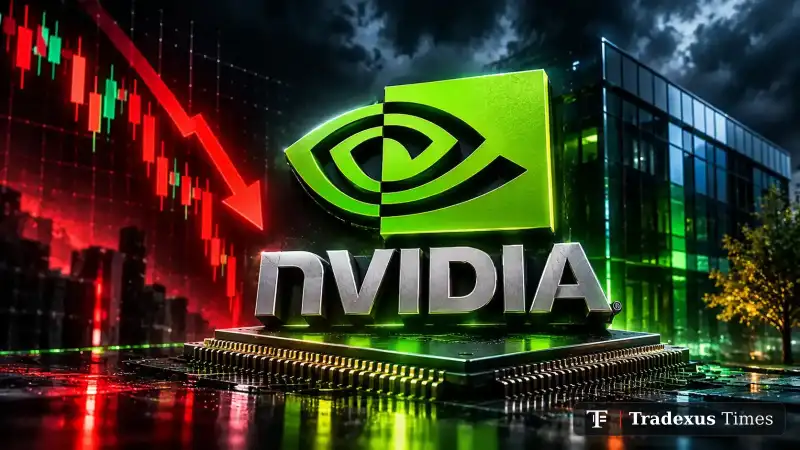
Rickards said on Nov. 23 that Nvidia CEO Jensen Huang's reinstatement would provide only a short-lived boost to equities, describing the AI financing ecosystem as vulnerable to a potential collapse. Nvidia shares surged 31.5% to $165.05 following Huang's return, but subsequently declined to $155.38 on Nov. 24 and $149.30 on Nov. 25, surrendering a significant portion of the initial gains.
Bitcoin also experienced volatility during the same period, briefly reaching $64,505 on Nov. 23 before falling below $60,000 two days later. The simultaneous weakness in technology stocks and crypto markets highlights how investor sentiment toward AI-related assets can influence broader risk appetite across financial markets.
AI financing practices have also attracted political and regulatory scrutiny. Senator Cory Booker requested records from Nvidia concerning contacts with the Trump administration, including discussions involving export controls, antitrust enforcement and the company's board. Booker raised concerns that Nvidia's investments in customers purchasing its chips could potentially influence procurement decisions and disadvantage competing suppliers.
The debate surrounding AI infrastructure financing has intensified following proposals announced in August aimed at mobilizing more than $500 billion in third-party capital. These initiatives remain subject to final agreements, while Rickards' allegations of Ponzi-like financing remain unproven.
Nvidia's governance and legal challenges are also continuing. The company and Huang reached a proposed $290 million settlement with investors over allegations that Nvidia misrepresented cryptocurrency mining-related demand for graphics chips. The settlement requires preliminary court approval, and both Nvidia and Huang deny wrongdoing.
Additional legal proceedings and congressional interviews scheduled for early December could keep Nvidia under scrutiny, potentially adding uncertainty to investor sentiment surrounding the AI sector. While Nvidia continues to retain a portion of its recent gains, the combination of financing concerns, regulatory scrutiny and weakening momentum across technology and crypto markets has renewed questions about the sustainability of the AI-driven rally.