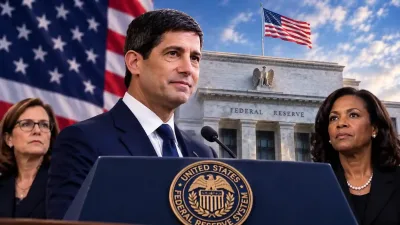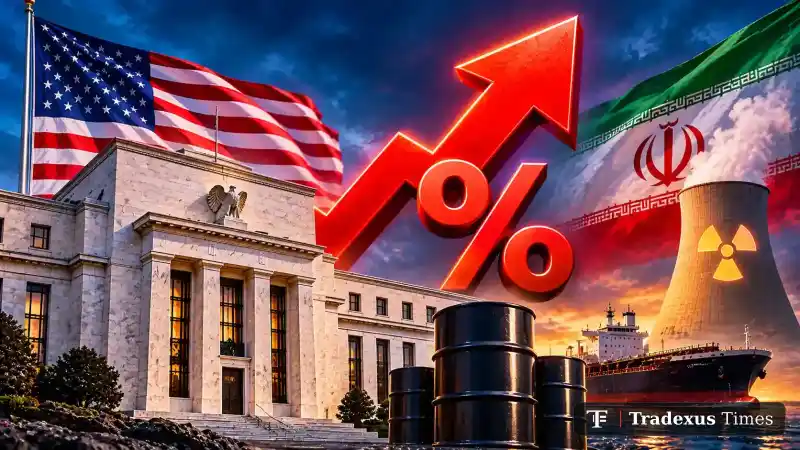
Expectations for another Federal Reserve interest-rate increase have surged ahead of the December 9 policy decision, with financial markets now assigning approximately 92% to 96% probability to a 25-basis-point hike. The shift reflects persistent US inflation, resilient economic activity and growing concerns that escalating tensions in the Middle East could prolong energy-related price pressures.
Market pricing represents a dramatic change in expectations over recent months. According to available market data, the implied probability of a December rate increase was around 70% in early October before climbing above 90% in November. The current federal funds target range stands at 3.75% to 4.00%. A quarter-point increase would lift it to 4.00%–4.25%, while some market pricing also reflects a smaller possibility of a larger move.

Inflation remains a central concern for policymakers. US consumer inflation reached 4% year over year in October, while the Federal Reserve's November Beige Book described continued price pressures across several sectors. A Reuters survey of economists also found broad expectations for a December increase, with higher energy costs linked to the Iran conflict contributing to the inflation outlook.
Geopolitical developments are adding another layer of uncertainty. The Strait of Hormuz is effectively operating under severe restrictions rather than normal commercial conditions. Maritime tracking data show that commercial traffic has fallen dramatically, while attacks and threats against vessels continue. On November 27, Brent crude traded near $96.61 per barrel, with analysts warning that prices could move above $100 if disruptions further constrain available supplies.
Meanwhile, a report published by the Institute for Science and International Security on November 26 described rapid construction of a fortified underground complex in Iran known as the Behjatabad facility. Satellite imagery reportedly shows tunnel construction and new security infrastructure between major Iranian nuclear sites. However, the institute stressed that the facility's exact purpose remains unclear and that a nuclear function has not been established.
The report has emerged amid broader concerns about renewed military confrontation. CBS News reported on November 20, citing sources familiar with the matter, that the United States and Israel were considering another possible assault on Iran, partly because of concerns over the rebuilding of Iranian missile capabilities and the protection of military and nuclear infrastructure underground. Neither government publicly confirmed plans for an imminent attack. No independently confirmed public statement has established that the newly reported Behjatabad facility itself has triggered a decision to strike.
For the Federal Reserve, the economic consequences of further escalation could be significant. A prolonged disruption to the Strait of Hormuz could push oil and transportation costs higher, feeding into consumer prices and business expenses. If those pressures persist, policymakers may have less room to ease monetary policy and could proceed with additional increases even as higher borrowing costs weigh on economic activity.
The risk is not limited to inflation. A broader conflict could also weaken consumer confidence, disrupt trade and increase volatility across financial markets. This creates a difficult policy dilemma: higher energy prices could strengthen the case for tighter monetary policy, while the economic damage caused by a prolonged conflict could eventually argue for a more cautious approach.
With markets already pricing in a high probability of a December rate increase, the Federal Reserve's next decision will depend heavily on incoming inflation and economic data, as well as developments in energy markets. A further escalation involving Iran could reinforce expectations of tighter monetary policy, while any meaningful improvement in shipping conditions or energy supply could ease some of the pressure.