
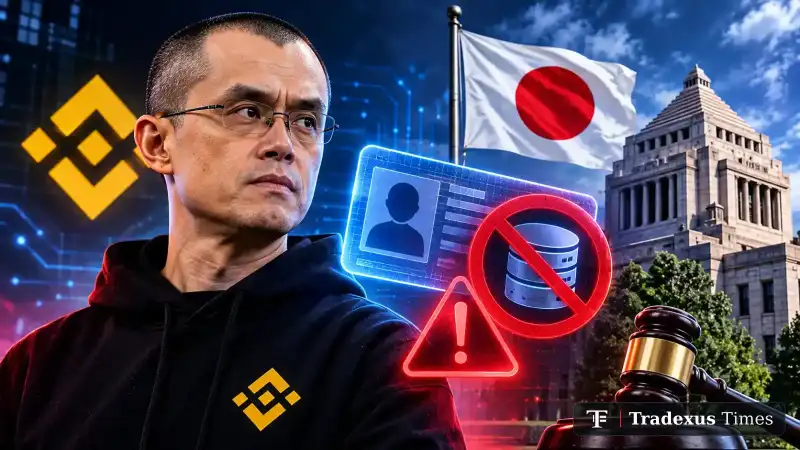
Binance founder Changpeng Zhao has raised concerns about the storage of sensitive personal information after Japan's Personal Information Protection Commission called on rental car companies to avoid retaining unnecessary copies of customers' identity documents.
In a post on X, Zhao drew attention to a November 18 notice from the Japanese regulator, which urged rental car operators to exercise caution when storing images of driver's licenses and other government-issued identification. The warning followed a major cybersecurity incident involving Times Car, a car-sharing service operated by Park24 Group.

Park24 detected suspicious activity in its systems on September 25 and launched an investigation into possible unauthorized access. In an October 23 disclosure, the company said approximately 6.63 million customer accounts had been affected.
The investigation also identified evidence that 1,464,800 encrypted images of identification documents, including driver's licenses, had been transmitted to external locations. An additional 891,602 encrypted ID images were found to have been accessed under suspicious circumstances, although investigators found no evidence that these files had been transferred outside the company's systems.
Japan's regulator emphasized the risks associated with retaining sensitive information beyond the period necessary for its original purpose. Unnecessary storage can increase the potential damage from a cyberattack by creating larger collections of personal data that could be exposed.
Although the notice specifically addresses the rental car industry, Zhao's reaction has broader implications for digital asset platforms. Centralized cryptocurrency exchanges commonly require customers to complete Know Your Customer procedures, which can involve submitting passports, national identity cards, driver's licenses and other personal documents.
These records can become valuable targets for cybercriminals. If exposed, identity information may be used in phishing campaigns, identity theft, fraudulent account creation and other forms of financial abuse.
The incident highlights a key challenge for companies that collect identity documents: balancing regulatory and verification requirements against the security risks of retaining sensitive records. For crypto platforms, data protection involves not only securing information while it is stored, but also limiting how much personal data is retained and how long it remains accessible.